The Comprehensive Functional Neurological Evaluation (C-FNE™) and the Short-Term Concussion Disability (ST-CD) Scale: Development of an Objective Framework for Assessing Functional Neurological Disability Following Concussion-Type Traumatic Brain Injury (cTBI)
Wayne Croft, PhD, MMS, AIB-C • Ian Dawe, APRN, FNP-C, AIB-VRC • Andrew Garrett, DO • Clark Rasmussen, MD · July 2026
NeuroLyteDxARC Medical CenterInjury Accident NetworkprIME Medical Reports
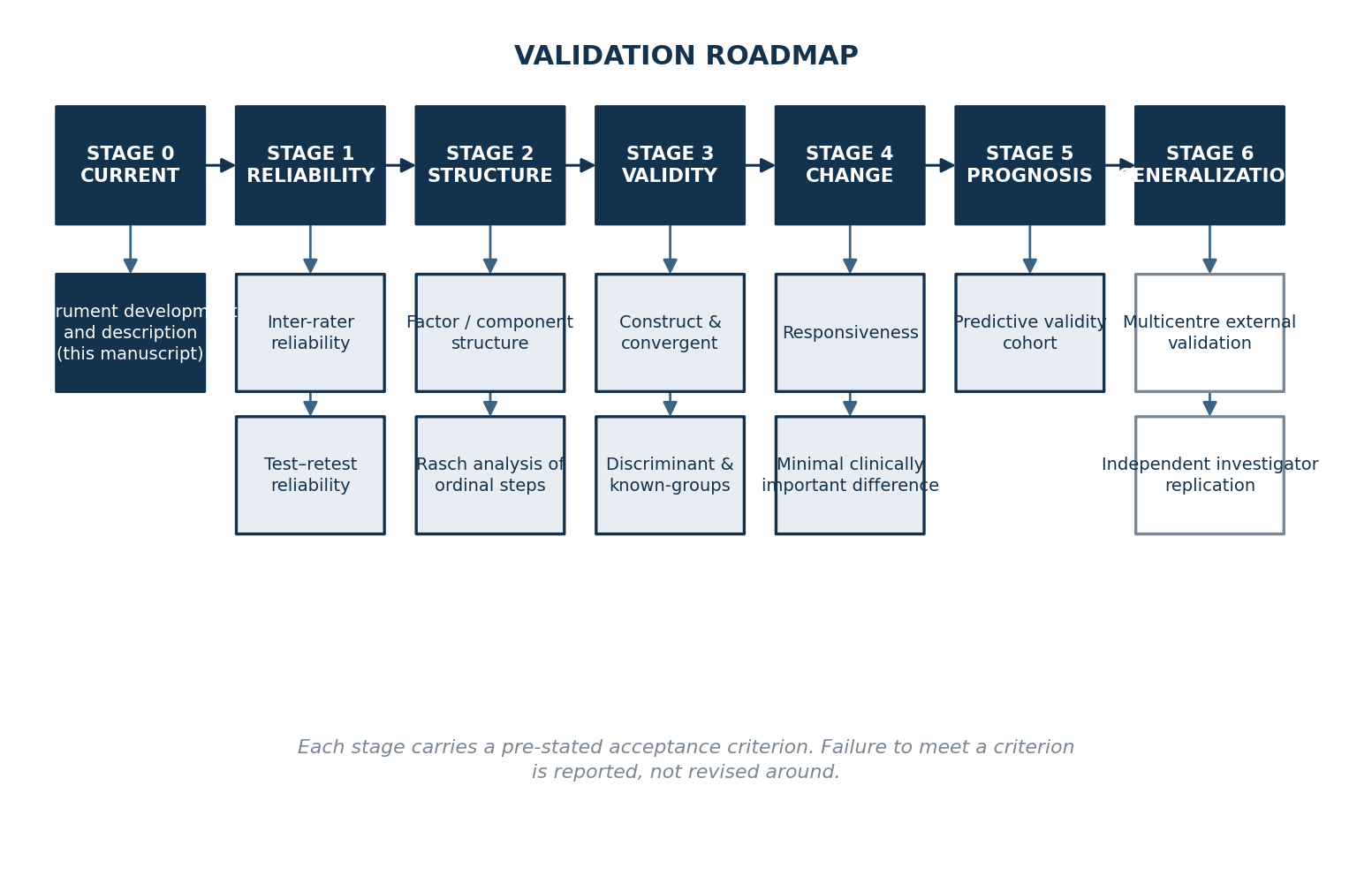
Concussion produces multisystem functional disturbance that structural imaging routinely misses, and concussion medicine has no equivalent of the standardized multidomain disability scales — EDSS, NIHSS, mRS, FIM — that transformed the rest of neurology. The Short-Term Concussion Disability (ST-CD) Scale, derived from the Comprehensive Functional Neurological Evaluation (C-FNE™), aggregates objective findings from nine functional systems into a single ordinal score from 0 to 10 in 0.5-point increments, each step anchored to a defined proportion of waking time during which function is materially impacted. This manuscript sets out the conceptual foundation, measurement model, development history, scoring architecture, design decisions and rejected alternatives, and intended clinical use. It presents no psychometric validation data: the scale is explicitly an investigational instrument, is not diagnostic, does not establish causation or permanent impairment, and a staged validation program remains to be completed.
Manuscript status and scope. This manuscript is a descriptive scale-development and methodology report. It presents the conceptual foundation, design rationale, development history, scoring architecture, and intended clinical application of the Short-Term Concussion Disability (ST-CD) Scale. It does not present psychometric validation data. Reliability, validity, responsiveness, and predictive performance have not yet been formally established, and the scale should be regarded as an investigational clinical instrument pending the validation program outlined in Section 12.0.
Introduction
Background
Traumatic brain injury (TBI) is among the leading causes of acquired neurological disability worldwide, affecting millions of individuals annually through motor vehicle collisions, falls, sports-related injuries, occupational trauma, military service, and assaults.1–5 Although many traumatic brain injuries are classified as mild traumatic brain injuries (mTBI), commonly referred to as concussions, the designation mild describes the initial injury severity rather than the potential magnitude or duration of neurological dysfunction experienced by the patient. Many individuals continue to experience persistent deficits affecting cognition, balance, vision, vestibular function, executive performance, emotional regulation, sleep, and activities of daily living long after the initial injury.2–7
The societal burden associated with concussion extends well beyond the acute injury. Persistent neurological dysfunction contributes to reduced workplace productivity, prolonged disability, increased healthcare utilization, diminished quality of life, and substantial economic costs to patients, employers, healthcare systems, and society.3,4 While many individuals recover within several weeks, a significant proportion experience persistent symptoms requiring multidisciplinary evaluation and rehabilitation.2,6 Accurate identification and quantification of neurological dysfunction during this period are essential for directing treatment, monitoring recovery, facilitating return-to-work and return-to-play decisions, and supporting medicolegal determinations when appropriate.2,8
Despite substantial advances in concussion research over the past two decades, objectively quantifying the overall functional consequences of concussion remains a significant clinical challenge. Conventional structural imaging modalities, including computed tomography (CT) and magnetic resonance imaging (MRI), are invaluable for identifying hemorrhage, skull fractures, cerebral edema, and other structural pathology requiring urgent intervention.9 However, these modalities frequently appear normal in patients with concussion despite clinically meaningful neurological dysfunction.10–13 Advanced neuroimaging techniques, including diffusion tensor imaging (DTI), have improved scientific understanding of group-level white matter abnormalities following concussion but remain limited in routine clinical practice because of variability in acquisition protocols, lack of standardized normative databases, and uncertain interpretation at the individual patient level.12–15 Consequently, functional assessment rather than structural imaging continues to form the cornerstone of concussion evaluation and management.8,9
Current concussion assessment incorporates numerous clinical instruments, including symptom inventories, neurological examinations, computerized cognitive testing, vestibular and oculomotor assessments, balance testing, psychological screening instruments, and functional performance measures.8,16–21 Each contributes valuable information regarding specific aspects of neurological function; however, these assessments are frequently interpreted independently and often fail to provide a standardized measure of the patient’s overall functional neurological disability. As a result, clinicians may successfully identify individual impairments while lacking an objective method to quantify the cumulative impact of multisystem neurological dysfunction on daily function, treatment planning, and recovery monitoring.
This challenge is not unique to concussion medicine. Throughout neurology, standardized disability scales have fundamentally transformed patient care by providing objective methods for quantifying disease severity, monitoring progression, facilitating communication among healthcare professionals, standardizing research outcomes, and supporting clinical decision-making. The Expanded Disability Status Scale (EDSS) for multiple sclerosis, the National Institutes of Health Stroke Scale (NIHSS), the Modified Rankin Scale (mRS), and the Functional Independence Measure (FIM) have become integral components of neurological practice because they provide a common language for describing functional disability beyond diagnosis alone.22–26
Concussion medicine currently lacks a similarly comprehensive multidomain disability framework capable of objectively integrating neurological findings across the vestibular, oculomotor, cognitive, balance, motor, autonomic, cranial nerve, and psychological systems commonly affected following injury. Although symptom severity scales remain valuable for documenting the patient’s subjective experience, symptom burden alone does not consistently correlate with objectively measurable neurological dysfunction or functional capacity.17,19,20 Patients with similar symptom scores may demonstrate markedly different objective deficits, recovery trajectories, rehabilitation needs, and long-term outcomes. Conversely, clinically significant neurological dysfunction may persist despite partial symptom resolution, emphasizing the need for a standardized framework that extends beyond subjective symptom reporting alone.11,12,20
To address this unmet clinical need, the Comprehensive Functional Neurological Evaluation (C-FNE™) was developed as a standardized multidomain assessment integrating objective neurological measurements across the functional systems most commonly disrupted following concussion. Through standardized clinical examination techniques and instrumented assessments, the C-FNE provides clinicians with reproducible measures of neurological function that extend beyond structural imaging and symptom inventories alone.
Building upon this comprehensive examination framework, the Short-Term Concussion Disability (ST-CD) Scale was subsequently developed to provide a standardized measure of current functional neurological disability following concussion. Rather than functioning as a diagnostic instrument, the ST-CD Scale synthesizes objective findings generated during the C-FNE into a clinically meaningful representation of the patient’s overall neurological disability during the acute and subacute phases of recovery. The scale is intended to facilitate communication among healthcare providers, support individualized treatment planning, monitor recovery over time, assist return-to-function decision-making, and establish a common language for describing concussion-related disability across clinical practice, research, and medicolegal settings.
The ST-CD Scale has undergone continuous iterative refinement through approximately seven years of routine clinical application within a multidisciplinary concussion program and has been incorporated into more than 5,000 patient evaluations. This extensive clinical experience has informed the evolution of the examination framework, domain selection, scoring methodology, and interpretation guidelines presented in this manuscript. Although formal psychometric studies evaluating reliability, construct validity, criterion validity, responsiveness, and predictive performance remain an important future objective, the purpose of this manuscript is not to present definitive validation data. Rather, its purpose is to describe the conceptual foundation, scientific rationale, development process, methodology, and intended clinical application of the ST-CD Scale as an objective framework for measuring short-term functional neurological disability following concussion.
Terminology. Throughout this manuscript, the term concussion-type traumatic brain injury (cTBI) is used to describe the subset of traumatic brain injuries traditionally classified as concussion or uncomplicated mild traumatic brain injury (mTBI). The designation is intended solely as a concise descriptive term for this clinical phenotype and is not proposed as a replacement for existing diagnostic classifications. It is used throughout this manuscript for clarity and consistency. Section 1.1 retains the conventional terms where the equivalence between them is being established; the abbreviated form is used thereafter.
Current Challenges in Concussion Assessment
Accurate assessment of concussion remains one of the most complex challenges in contemporary neurological practice. Although substantial advances have been made in the diagnosis and management of mild traumatic brain injury (mTBI), clinicians continue to face significant difficulties in objectively characterizing the functional consequences of injury, monitoring recovery, and communicating the severity of neurological dysfunction using standardized methods.2,8,9
Unlike many neurological disorders characterized by discrete structural lesions or well-defined pathological processes, concussion primarily represents a disturbance of neurological function. Biomechanical forces transmitted to the brain during injury initiate a complex cascade of metabolic, electrophysiological, vascular, inflammatory, and neurochemical changes that may disrupt neuronal communication without producing abnormalities detectable by conventional structural imaging.9–13 As a result, many patients demonstrate significant neurological dysfunction despite normal radiographic findings, creating an inherent disconnect between structural assessment and clinical presentation.
Limitations of Structural Neuroimaging
Computed tomography (CT) remains the imaging modality of choice for the acute evaluation of head trauma because of its rapid acquisition, widespread availability, and high sensitivity for detecting life-threatening conditions such as intracranial hemorrhage, skull fractures, mass effect, and cerebral edema.9 However, CT was never intended to evaluate the subtle functional disturbances that characterize uncomplicated cTBI. Consequently, the majority of patients diagnosed with cTBI demonstrate normal CT findings despite clinically significant neurological symptoms and objective functional deficits.8,9
Magnetic resonance imaging (MRI) offers substantially greater soft tissue resolution than CT and is capable of identifying structural abnormalities including diffuse axonal injury, cerebral contusions, ischemic changes, and other parenchymal pathology not visible on CT. Nevertheless, conventional MRI also frequently appears normal in patients with cTBI, particularly during the acute and subacute stages following injury.10–12 The absence of structural abnormalities should therefore not be interpreted as evidence that neurological function remains intact.
Advanced neuroimaging techniques, including diffusion tensor imaging (DTI), susceptibility-weighted imaging (SWI), functional magnetic resonance imaging (fMRI), magnetic resonance spectroscopy (MRS), and positron emission tomography (PET), have significantly expanded scientific understanding of cTBI-related brain dysfunction. Numerous investigations have demonstrated alterations in white matter integrity, functional connectivity, cerebral metabolism, and network organization following cTBI.11–15 However, despite their value as research tools, these technologies remain limited in routine clinical practice due to variability in acquisition protocols, differences among imaging platforms, lack of universally accepted normative datasets, limited reproducibility across institutions, and uncertainty regarding interpretation at the individual patient level.12–15 Consequently, these modalities currently complement rather than replace comprehensive clinical assessment.
Importantly, structural imaging and functional neurological assessment should not be viewed as competing approaches but rather as complementary components of comprehensive concussion evaluation. Structural imaging identifies anatomical injury, whereas functional assessment evaluates the neurological consequences of injury on human performance.
Limitations of Symptom-Based Assessment
Patient-reported symptom inventories have become central components of concussion management because they provide insight into the patient’s subjective experience and facilitate serial monitoring throughout recovery. Instruments such as the Post-Concussion Symptom Scale (PCSS), Rivermead Post-Concussion Symptoms Questionnaire (RPQ), and Sports Concussion Assessment Tool (SCAT) are widely used in both clinical practice and research.16–19
Despite their widespread acceptance, symptom inventories possess inherent limitations. Symptom reporting is influenced by numerous factors including mood disorders, sleep quality, anxiety, depression, chronic pain, medication effects, cultural differences, litigation status, patient expectations, and individual symptom tolerance.20–22 Furthermore, patients may intentionally or unintentionally underreport or overreport symptoms for a variety of reasons, introducing variability that is independent of neurological function.
Perhaps more importantly, symptom severity does not consistently correlate with objectively measurable neurological dysfunction. Individuals reporting relatively mild symptoms may demonstrate significant vestibular impairment, oculomotor dysfunction, balance deficits, or cognitive abnormalities, whereas others reporting severe symptom burden may demonstrate comparatively limited objective findings.17,19,23 Consequently, symptom inventories should be viewed as valuable measures of patient perception rather than direct measures of functional neurological disability.
Fragmentation of Functional Assessment
Modern concussion management frequently incorporates multiple objective assessments targeting specific neurological systems, including vestibular evaluation, oculomotor testing, computerized cognitive assessment, instrumented balance analysis, dual-task performance, reaction time testing, cranial nerve examination, and psychological screening.16–25
Although each assessment contributes important information regarding a particular aspect of neurological function, these instruments are generally interpreted independently. Clinicians must mentally synthesize findings across numerous tests without the benefit of a standardized framework capable of integrating objective abnormalities into a single measure of overall neurological disability. This fragmented approach increases variability in clinical interpretation, complicates communication among providers, and limits the ability to objectively monitor overall neurological recovery over time.
Similar challenges historically existed in other neurological disorders before the development of standardized disability scales. In multiple sclerosis, stroke, spinal cord injury, and rehabilitation medicine, objective disability instruments transformed clinical care by providing common metrics for describing disease severity, monitoring progression, evaluating treatment response, and facilitating research.22–26 Concussion medicine has experienced substantial advances in individual assessment technologies; however, a comparable multidomain disability framework has not been widely adopted.
The Need for an Integrated Functional Framework
The challenge in concussion medicine is therefore not the absence of objective testing, but rather the absence of a standardized methodology for integrating objective neurological findings into a reproducible measure of current functional disability. Existing assessments successfully identify abnormalities within individual neurological systems, yet clinicians frequently lack a common language to quantify the cumulative functional impact of multisystem dysfunction.
An integrated framework should preserve the strengths of individual assessments while synthesizing objective findings into a standardized representation of overall neurological disability. Such a framework has the potential to improve interdisciplinary communication, support individualized treatment planning, facilitate serial monitoring of recovery, standardize research outcomes, and enhance the consistency of medicolegal and disability evaluations.
The Comprehensive Functional Neurological Evaluation (C-FNE) and the Short-Term Concussion Disability (ST-CD) Scale were developed to address this unmet need. Together, they provide a standardized approach for objectively evaluating multiple neurological systems and quantifying the patient’s current level of functional neurological disability during the recovery process following cTBI.
Objectives and Structure of This Manuscript
This manuscript has five objectives. First, to establish the conceptual and measurement basis on which a disability scale for concussion should rest — the international framework for functioning and disability, the lineage of established neurological disability instruments, the construct being measured, the measurement model adopted, and the justification for an ordinal structure (Sections 2.0 and 3.0). Second, to document the development history of the C-FNE and the ST-CD Scale, including the reasoning behind domain and instrument selection and the successive revisions that produced the current version (Section 4.0). Third, to state every substantive design decision with its rationale and its accepted cost, together with the alternative approaches considered and the grounds on which each was rejected (Section 5.0). Fourth, to describe the examination and the scale in sufficient technical detail that an independent clinician or investigator could reproduce the scoring procedure (Sections 6.0 and 7.0). Fifth, to define the appropriate uses, the boundaries of appropriate use, and the validation work that must be completed before the instrument can be recommended for general adoption (Sections 8.0 through 12.0).
The manuscript deliberately follows a sequential argument rather than a defense of a proprietary method. The problem is stated first; the inadequacy of existing approaches is examined; the meaning of disability is defined; the case for objective measurement is made; the examination that generates the objective data is described; the conversion of those data into a standardized score is specified; clinical use is explained; and the outstanding scientific obligations are stated plainly.
Conceptual Foundation: What a Disability Scale Should Measure
Before a new disability instrument can be justified, the construct it intends to measure must be defined precisely. Terms such as injury, impairment, disability, and handicap are frequently used interchangeably in clinical, insurance, and legal settings, yet they describe distinct phenomena that carry different clinical and administrative consequences. Conflation of these terms is one of the principal sources of inconsistency in concussion documentation.
Impairment, Activity Limitation, and Participation Restriction
The World Health Organization’s International Classification of Functioning, Disability and Health (ICF) provides the accepted international vocabulary for describing human functioning.27 Within that framework, impairment denotes a problem in body function or structure, such as reduced vestibulo-ocular gain, saccadic dysmetria, or diminished postural stability. Activity limitation denotes difficulty executing a task, such as reading a page of text, descending stairs, or sustaining attention through a meeting. Participation restriction denotes a problem experienced in life situations, such as an inability to work a full shift, drive, or return to study. Contextual factors — environmental and personal — modulate the relationship among these levels.27
Concussion is unusual in that impairment can be substantial while remaining invisible on structural imaging, and activity limitation can be profound while conventional bedside neurological examination appears unremarkable. A useful concussion disability scale must therefore be anchored in measurable impairment, but must express its output in terms that relate to activity and participation. The ST-CD Scale is constructed on precisely this logic: its inputs are objective impairment measures, and its output is expressed as a graded statement about functional capacity in daily life.
Definition used throughout this manuscript. Short-term concussion disability is the magnitude of functional limitation attributable to objectively demonstrable neurological dysfunction, measured at a defined point during the acute or subacute recovery period, before maximal medical improvement has been established. It is a state measure, not a permanent characteristic of the patient, and it is expected to change as recovery progresses or fails to progress.
Lessons from Established Neurological Disability Scales
Four instruments dominate the measurement of neurological disability and each contributes a distinct design lesson to the present work.
The Expanded Disability Status Scale (EDSS), introduced by Kurtzke in 1983 for multiple sclerosis, remains the most direct structural antecedent of the ST-CD Scale.22 Its defining feature is a two-level architecture: the examiner first grades several Functional Systems from the neurological examination, then converts those graded systems into a single ordinal score from 0 to 10 in half-point increments. The lower portion of the EDSS range is governed principally by examination findings, while the upper range is governed by ambulatory capacity. The EDSS demonstrates that an ordinal global score can be rendered reproducible when it is explicitly derived from a structured examination rather than from global clinical impression — the principle later formalized in standardized Neurostatus scoring and rater certification.22,28 It also illustrates the recognized weaknesses of ordinal disability scales: non-linear step intervals, uneven sensitivity across the range, and heavy weighting of a single domain at the upper end.28,29
The National Institutes of Health Stroke Scale (NIHSS) demonstrates the value of item-level operational definitions.23 Every item specifies exactly what the examiner does and exactly what score each observed behavior receives. This granularity, coupled with mandatory rater training, is the principal reason the NIHSS achieves acceptable inter-rater agreement across thousands of examiners in routine clinical settings. The lesson adopted here is that reproducibility is a function of scoring rules, not of examiner expertise alone.
The modified Rankin Scale (mRS) demonstrates the communicative power of a short, interpretable ordinal scale.24 Its six grades are immediately meaningful to clinicians, patients, payers, and courts. Its known weakness — substantial inter-rater variability when applied without a structured interview — reinforces the same lesson drawn from the NIHSS.24,30
The Functional Independence Measure (FIM) demonstrates the value of anchoring grades to observable performance of daily activities and to the amount of assistance required.25,26 Its influence on the ST-CD Scale lies in the decision to anchor each global step to a statement about real-world functional capacity rather than to an abstract severity adjective.
A fifth instrument, the Glasgow Outcome Scale–Extended (GOS-E), is widely used in traumatic brain injury outcome research.31 Its coarse eight-category structure is well suited to describing global outcome after moderate and severe TBI but is insufficiently sensitive to discriminate among patients with cTBI, the overwhelming majority of whom fall within its top one or two categories. This ceiling effect is a central reason a concussion-specific scale is required.
Table 1. Design characteristics of established neurological disability scales and the corresponding design decisions adopted for the ST-CD Scale.
Instrument
Population
Range / structure
Principal strength
Design lesson adopted for ST-CD
EDSS22
Multiple sclerosis
0–10, 0.5 steps; 7–8 Functional Systems
Global score explicitly derived from a structured neurological examination
Two-level architecture: Functional System Scores aggregated into a global 0–10 ordinal score in 0.5 steps
NIHSS23
Acute stroke
0–42 summed items
Item-level operational definitions; strong inter-rater agreement with training
Every domain grade is tied to a stated measurement threshold, not to impression
mRS24
Stroke / general neurology
0–6 ordinal
Immediately interpretable across disciplines
Interpretive category bands layered over the numeric continuum
FIM25,26
Rehabilitation
18 items, 7 levels each
Anchored to observable performance and assistance required
Global steps anchored to real-world functional capacity, not severity adjectives
GOS-E31
Moderate–severe TBI
1–8 categories
Standard endpoint in TBI outcome trials
Demonstrates the ceiling effect that a concussion-specific scale must avoid
Why Concussion Disability Should Be Measured Objectively
Three arguments support anchoring a concussion disability scale in objective measurement.
The measurement argument. Symptom report and functional disability are related but distinct constructs. Correlation between symptom burden and objective performance after cTBI is consistently modest, and the direction of divergence is not predictable at the individual level.17,19,23 An instrument built primarily on symptom report therefore measures perception with reasonable fidelity and function with poor fidelity.
The clinical argument. Treatment after cTBI is domain-specific. Vestibular rehabilitation addresses vestibular and balance dysfunction; oculomotor therapy addresses convergence, saccadic, and pursuit deficits; cognitive rehabilitation addresses attention and processing speed; behavioral health addresses mood, anxiety, traumatic stress, and insomnia.32–36 A global symptom score cannot direct therapy because it does not identify which system is failing. A domain-resolved objective assessment can.
The evidentiary argument. Concussion is frequently evaluated in contexts where the findings will be scrutinized — disability determination, workers’ compensation, personal injury litigation, return-to-duty and return-to-play decisions. In these settings, self-report is routinely discounted. Instrument-derived measurements obtained under standardized conditions are not immune to challenge, but they shift the discussion from whether the patient is credible to whether the measurement is valid, which is a scientifically tractable question. This consideration must never distort clinical judgment, and Section 10.0 addresses the ethical boundaries directly.
Short-Term Disability Is Not Permanent Impairment
A distinction that is frequently blurred in practice, and that the ST-CD Scale deliberately enforces, is the difference between short-term disability and permanent impairment. Permanent impairment rating — as codified in the American Medical Association Guides to the Evaluation of Permanent Impairment and analogous jurisdictional schedules — is a determination of permanent loss, appropriately performed only after the patient has reached maximal medical improvement (MMI), meaning that further material recovery is not anticipated.37 Applying an impairment rating before MMI systematically misrepresents the patient’s condition, in either direction.
The ST-CD Scale occupies the interval before MMI. It answers a different question: how disabled is this patient right now, and by which systems? Serial ST-CD scores across the recovery period generate a disability trajectory. When a subsequent permanent impairment evaluation becomes appropriate, that trajectory constitutes documented evidence of the course of recovery, but the ST-CD score is not itself an impairment rating and must not be converted into one. This boundary is restated in Sections 8.0, 8.0, and 9.0 because its violation is the most likely misuse of the instrument.
Table 2. Distinction between short-term disability measurement and permanent impairment rating.
Dimension
ST-CD Scale (short-term disability)
Permanent impairment rating
Timing
Acute and subacute phase; any point before maximal medical improvement
Only after maximal medical improvement is established
Question answered
What is the patient’s current functional neurological disability, and which systems drive it?
What permanent loss of function remains after recovery has plateaued?
Expected behavior over time
Expected to change; serial measurement is the point
Expected to be stable; a single determination
Primary clinical use
Directing rehabilitation, monitoring recovery, graduated return to activity
Final disability apportionment and settlement of permanent loss
Relationship
Documents the recovery trajectory that precedes and informs impairment evaluation
Builds upon documented disability trajectories; does not replace them
Scientific Measurement Framework
A clinical instrument should state what it claims to measure, on what theory of measurement it rests, and what class of statistical treatment its output will and will not support. Instruments that omit this are frequently found, years later, to have been measuring something other than what their users assumed. This section sets out the measurement framework of the ST-CD Scale before any description of its content, so that the design decisions in Section 5.0 can be evaluated against a stated position rather than inferred from the result.
Construct Definition
The construct the ST-CD Scale is intended to measure is defined as follows.
Construct. Current functional neurological disability attributable to objectively demonstrable dysfunction across the neurological systems commonly disrupted by cTBI, measured at a defined point during the acute or subacute recovery period.
The construct includes: the magnitude and distribution of measurable dysfunction across vestibular, oculomotor, postural, cognitive, cranial nerve and sensory, motor, autonomic and headache, psychological, and participation domains, expressed as its consequence for daily function.
The construct excludes: diagnosis; causation; symptom burden as experienced; suffering; permanent impairment; prognosis; effort or credibility; and disability arising from non-neurological injury sustained in the same event.
Two features of this definition carry consequences throughout the manuscript. First, the construct is defined as a state, not a trait: it is expected to change, and an instrument measuring it must be capable of registering change. Second, the construct is defined as attributable to measurable dysfunction, which deliberately excludes disability that the patient experiences but that no measurement supports. This is a real limitation and is acknowledged as such in Section 11.0; it is accepted because the alternative — admitting unmeasured disability into a scale that claims objectivity — would defeat the purpose of building the instrument.
Measurement Philosophy
Three commitments define the measurement position adopted here.
Measurement precedes interpretation. A domain grade is produced by comparing a measurement against a stated threshold. The clinician’s judgment enters at defined points — anchor reconciliation and final assignment — and when it does, it is recorded. Judgment distributed invisibly throughout a scoring process is indistinguishable from unreliability.
Transparency is prior to accuracy. Between a more accurate procedure that cannot be written down and a less accurate procedure that can, the framework selects the latter. A procedure that is fully specified can be tested, criticized, and improved; an accurate but unspecified procedure cannot be, and its accuracy cannot be verified by anyone other than its author.
The instrument is falsifiable. Each proposition the framework advances — that the nine domains cohere as a measurement system, that the derivation rules order patients correctly, that the anchors mean what they say — is an empirical claim capable of being refuted by the studies in Section 12.0. The framework is written so that such refutation would be detectable rather than absorbed.
The Measurement Model: A Formative Composite
The distinction between reflective and formative measurement models is central to how the ST-CD Scale should be evaluated, and it is frequently overlooked in clinical scale development.38,39
In a reflective model, the items of a scale are interchangeable manifestations of a single underlying latent trait. Depression questionnaires are the standard example: low mood, anhedonia, and sleep disturbance are held to be expressions of an underlying depressive state, they are expected to correlate strongly with one another, and removing one item should not materially change what the scale measures. Reflective models justify internal-consistency statistics such as Cronbach’s alpha and are the natural target of common-factor analysis.
In a formative model, the components jointly constitute the construct rather than reflecting it. Socioeconomic status is the classic example: income, education, and occupation are not interchangeable expressions of an underlying quantity — they compose the quantity, they need not correlate, and deleting one changes the construct itself.39
The ST-CD Scale is a formative composite. A patient may have profound vestibular dysfunction with entirely normal cognition, or severe cognitive dysfunction with a normal vestibular examination. These domains are not expected to correlate, because they index anatomically and physiologically distinct systems that cTBI may disrupt independently. Removing the vestibular domain would not simply reduce the scale’s reliability; it would change what the scale measures.
Three consequences follow, and each is a commitment the authors are prepared to be held to.
Internal-consistency statistics are inappropriate as evidence of quality. A low inter-domain correlation is an expected property of this instrument, not a defect. Reporting Cronbach’s alpha for the ST-CD Scale would be a category error, and its absence from the validation plan in Section 12.0 is deliberate.
Common-factor analysis is not the correct structural test. Where structural analysis is undertaken, the appropriate questions are whether the domains contribute non-redundantly and whether the ordinal steps function as intended — questions addressed by principal component and Rasch methods applied to the ordinal structure, not by a search for a single latent factor.39,40
Content validity carries the burden that internal consistency carries elsewhere. Because the domains constitute the construct, the defensibility of the instrument rests principally on whether the domain set is complete and non-redundant. This is why Section 5.2 states the domain-selection criteria explicitly and why Section 6.6 argues each domain individually.
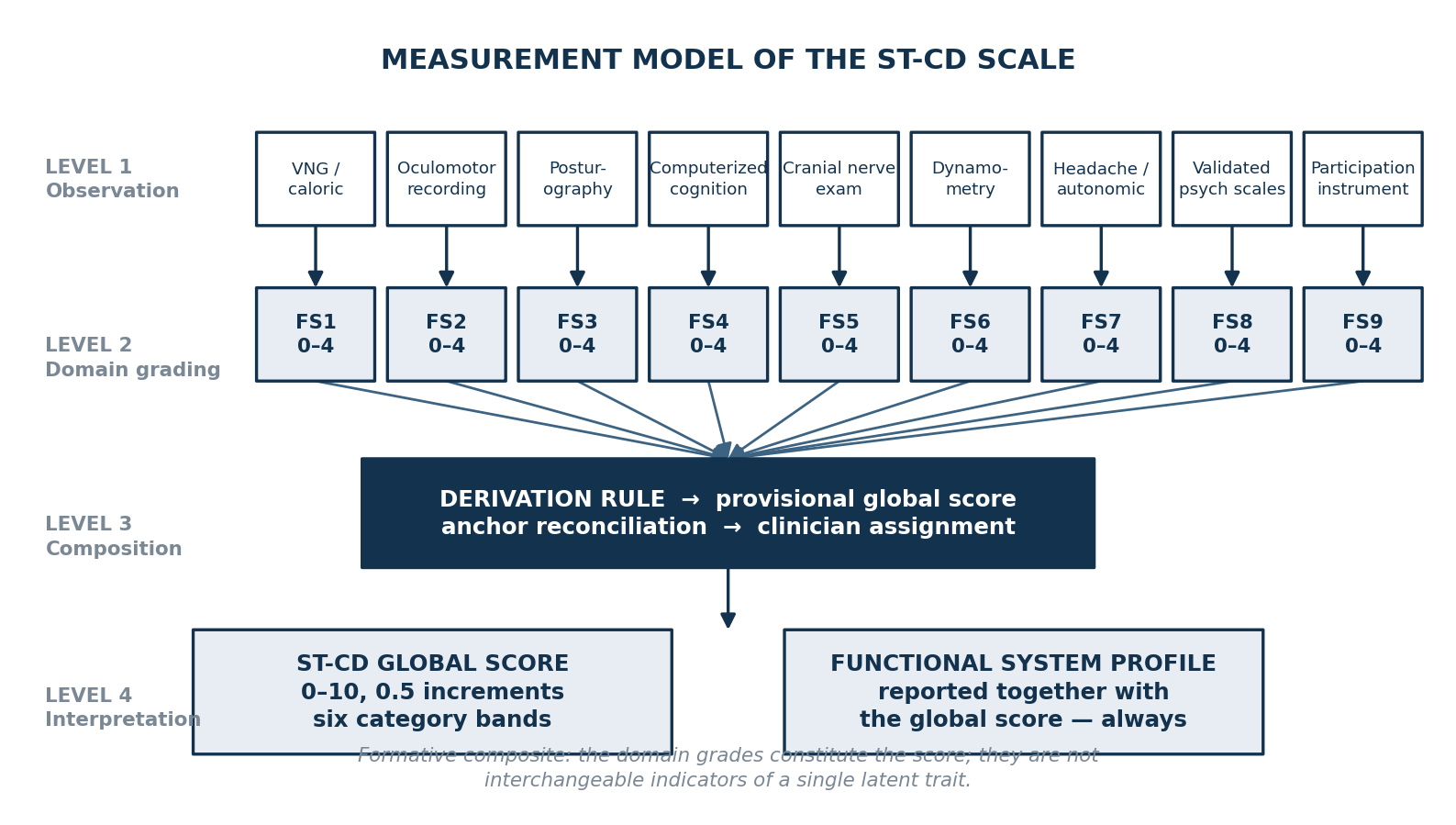
Figure 1. Measurement model of the ST-CD Scale. Objective measurements generate nine Functional System grades, which jointly constitute the composite rather than reflecting a single latent trait. The global score and the Functional System profile are reported together as a single output.
Justification of the Ordinal Structure
The ST-CD Scale is ordinal by design rather than by concession, and the reasoning should be stated rather than assumed.
Why not a continuous score. A continuous scale would imply that the underlying quantity is measured on an interval or ratio metric — that the difference between 2.0 and 3.0 equals the difference between 8.0 and 9.0. No such claim is defensible for a composite of heterogeneous domain grades. Presenting a continuous score would encode a measurement claim the instrument cannot support, would invite parametric analysis that the data do not license, and would imply a precision that the underlying gradings do not possess.40,41
Why not a simple category system. A purely categorical instrument — mild, moderate, severe — would be honest about its measurement properties but would lack the resolution required to track recovery. A patient improving within the moderate band would register no change at all, which defeats the purpose of a state measure intended for serial use.
Why an ordinal scale with interpretive bands. The chosen structure preserves the resolution needed for serial measurement while retaining the interpretability of categories. The numeric score orders patients; the category band communicates. The two are reported together precisely so that neither the false precision of the number nor the coarseness of the category operates alone.
What follows from ordinality. ST-CD scores should be summarized by median and range rather than mean and standard deviation; group comparisons should use non-parametric methods; and change scores should not be computed arithmetically until a Rasch or equivalent analysis has established whether an interval transformation is supportable.40,41 These constraints are stated here so that subsequent investigators inherit them rather than rediscover them.
Relationship Between the C-FNE and the ST-CD Scale
The two components of this framework are frequently conflated, and the distinction is worth stating precisely: the C-FNE is a measurement procedure; the ST-CD Scale is a scoring model applied to its output.
Table 3. Distinction between the C-FNE as a measurement procedure and the ST-CD Scale as a scoring model.
Dimension
C-FNE
ST-CD Scale
What it is
A standardized multidomain examination procedure
An ordinal scoring model applied to the examination’s output
What it produces
Quantitative measurements across nine functional systems
Nine domain grades and a single anchored global score
What it answers
Which systems are dysfunctional, and by how much?
What is the overall magnitude of current functional disability?
Can it exist alone?
Yes — the examination has clinical value with no score attached
No — the scale has no meaning without a completed examination
Substitutability
Equivalent instrumentation may be substituted where the measured physiological quantity is preserved
The scoring model is fixed; substituting derivation rules produces a different instrument
Failure mode
Incomplete or technically invalid measurement
Correct measurement combined by an inappropriate rule
The practical significance of the distinction is that the two components fail independently and must be validated independently. A perfectly executed C-FNE combined by a poor scoring rule yields a misleading score from sound data. A well-designed scoring rule applied to a poorly executed examination yields a misleading score from sound reasoning. The validation programme in Section 12.0 therefore evaluates measurement quality and scoring-model quality as separate questions.
Why Disability Is Measurable at All
A reasonable objection to any disability scale is that disability is a lived experience and that quantifying it is a category mistake. The objection deserves an answer rather than dismissal.
The framework does not claim to measure the experience of disability. It claims to measure something narrower and more tractable: the extent to which measurable neurological dysfunction restricts function. That quantity is measurable for the same reason visual acuity, ambulatory capacity, and pulmonary function are measurable — it varies systematically, it can be observed under standardized conditions, and it orders individuals in a way that predicts what they can do. The ICF framework rests on precisely this proposition, and every disability instrument in neurological practice is an application of it.27
What the framework accepts, in consequence, is that the score is a description of function and not a description of the patient. A patient with an ST-CD score of 6.5 is not “a 6.5”; the score states how much of that person’s day is currently constrained by dysfunction that was measured. This distinction is not merely rhetorical. It determines how the score should be written in a report, how it should be explained to a patient, and how it should be read by anyone else.
Development of the C-FNE and the ST-CD Framework
This section documents how the examination and the scale came into being. It is included deliberately and at length, because the credibility of a clinical instrument rests substantially on whether it emerged from sustained clinical use and iterative correction or was constructed as a theoretical exercise and applied afterward. The ST-CD Scale is a product of the former process.
Clinical Origin
The framework originated in 2021 within a multidisciplinary outpatient practice evaluating patients referred after motor vehicle collisions, falls, occupational injuries, assaults, and sport-related trauma. The referral pattern was consequential for design: a substantial proportion of patients presented in the subacute period, weeks to months after injury, rather than on the sideline or in the emergency department. Sideline and emergency-department instruments — which are optimized for rapid triage and removal-from-play decisions — were poorly matched to this population.19,32
Three recurring clinical failures motivated the work. First, patients arrived carrying normal CT or MRI reports that had been interpreted by prior providers, employers, and insurers as evidence that no injury existed, despite unambiguous functional deficits on examination. Second, when multiple objective tests were performed, each was reported separately and no document stated what the aggregate meant; referring providers received a folder of results rather than an answer. Third, when asked to characterize severity, clinicians within the practice produced inconsistent descriptions of comparable patients, because severity was being assigned by impression rather than by rule.
The first two problems required a standardized multidomain examination. The third required a scale.
Design Principles
Six principles were established at the outset and have governed every subsequent revision.
Objectivity of input. Every domain contributing to the global score must be graded from a measurement obtained by an instrument or from a standardized examination maneuver with a defined abnormality threshold. Symptom report may accompany, contextualize, and corroborate a domain grade, but may not by itself generate one.
Multidomain coverage. The examination must cover the functional systems empirically most affected by concussion, and must be able to detect isolated single-system dysfunction as well as diffuse multisystem involvement.
Reproducibility over precision. Where a choice existed between a more sensitive measurement that varied by examiner and a slightly coarser measurement that did not, the reproducible measurement was selected.
Explicit derivation. The route from measurement to domain grade, and from domain grades to global score, must be written down. An unwritten rule is an impression.
Clinician as final authority. The framework generates a derived score; a licensed clinician assigns the final score and documents any departure from the derived value with the reason. This mirrors established practice in structured neurological scoring and preserves accountability for the clinical judgment.28
Interpretability outside the specialty. The output must be intelligible to a primary care physician, a physical therapist, a case manager, an employer, and a court, without specialist translation.
Selection of the Functional Systems
Nine functional systems were selected. Candidate domains were evaluated against four criteria: documented frequency of involvement after cTBI in the peer-reviewed literature; availability of an objective or semi-objective measure suitable for routine outpatient use; demonstrated responsiveness to targeted rehabilitation; and non-redundancy with the domains already selected.
Vestibular, oculomotor, and postural control domains were included first, reflecting the high prevalence and rehabilitative tractability of vestibulo-ocular and balance dysfunction after cTBI.16,20,21,32,33 Cognitive processing was included on the strength of the extensive literature documenting deficits in attention, processing speed, and working memory after cTBI.6,10,34 Cranial nerve and sensory function and motor and strength function were included because cTBI frequently coexists with cervical, peripheral, and cranial nerve injury in the same mechanism, and because these findings are readily quantified.35 Autonomic and headache function was included because post-traumatic headache, photophobia, phonophobia, and exercise intolerance are among the most persistent and functionally limiting sequelae.36,42 Psychological and behavioral function was included because anxiety, depression, traumatic stress, and insomnia both accompany and independently prolong concussion recovery, and because validated brief instruments exist for each.43–47 Finally, activities of daily living and functional participation was retained as a distinct domain, reflecting the ICF principle that impairment and participation are not the same construct and that a disability scale must ultimately speak to the latter.27
Two candidate domains were considered and excluded. Isolated musculoskeletal pain was excluded as a scored domain because it is frequently attributable to concurrent injury rather than to neurological dysfunction and would confound the neurological construct; it is documented in the report but does not generate an ST-CD domain grade. Symptom burden as such was excluded as a scored domain for the reasons given in Section 1.2.2, and is recorded alongside the score as context.
Selection of Instrumentation
Instruments were selected for standardization, availability in an outpatient setting, tolerability by symptomatic patients, and generation of numeric output permitting threshold-based grading. Videonystagmography was adopted for vestibular and oculomotor assessment because it provides quantified recordings of spontaneous, gaze-evoked, and positional nystagmus, smooth pursuit gain, saccadic accuracy and latency, optokinetic response, and caloric responses.48,49 Instrumented posturography was adopted for postural control because force-platform measurement of center-of-pressure excursion is substantially more sensitive and more reproducible than observational balance scoring.20,21,50 Computerized cognitive testing was adopted for the cognitive domain to provide normatively referenced performance across attention, processing speed, working memory, and executive tasks.34,51 Quantitative dynamometry was adopted for motor and strength assessment.52 Validated brief screening instruments were adopted for the psychological domain, and a validated functional-impact instrument for the participation domain.43–47
It is a deliberate feature of the framework that the domain grading thresholds are specified in terms of the physiological quantity measured rather than in terms of a particular manufacturer’s device, so that equivalent instrumentation may be substituted. It is a corresponding limitation, addressed in Section 11.0, that equivalence across devices has not been formally demonstrated.
Evolution of the Scale
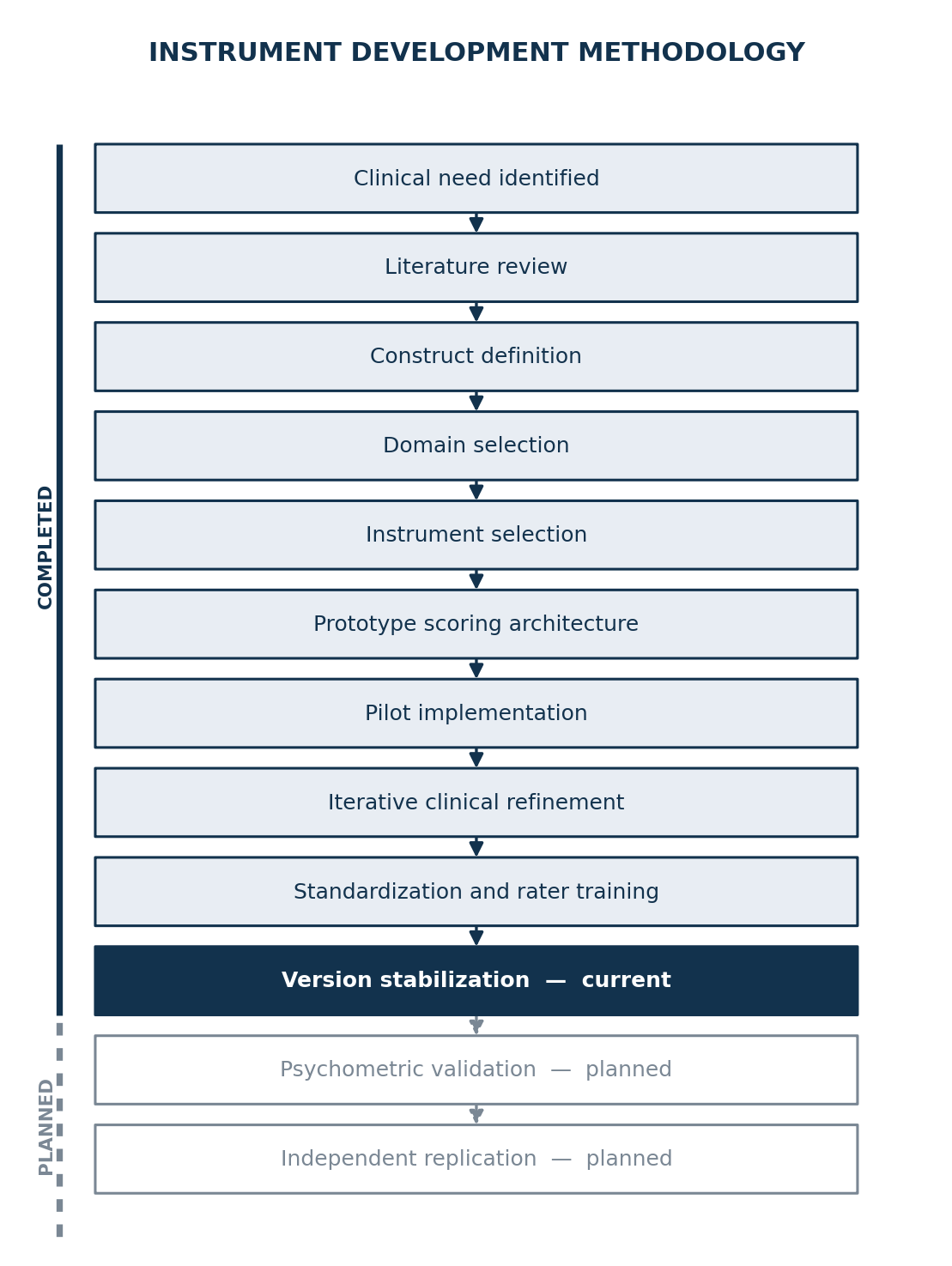
Development followed a sequence that is conventional in instrument construction but is rarely documented in clinical scale papers: identification of a clinical need, review of the relevant literature, definition of the construct, selection of domains and instruments, construction of a prototype scoring architecture, pilot implementation, iterative refinement under routine use, and standardization. Figure 2 sets out that sequence and marks the point the framework has currently reached.
Figure 2. Instrument development methodology. The framework has completed the stages through version stabilization. The psychometric validation and independent replication stages specified in Section 12.0 have not been undertaken.
Development Phases
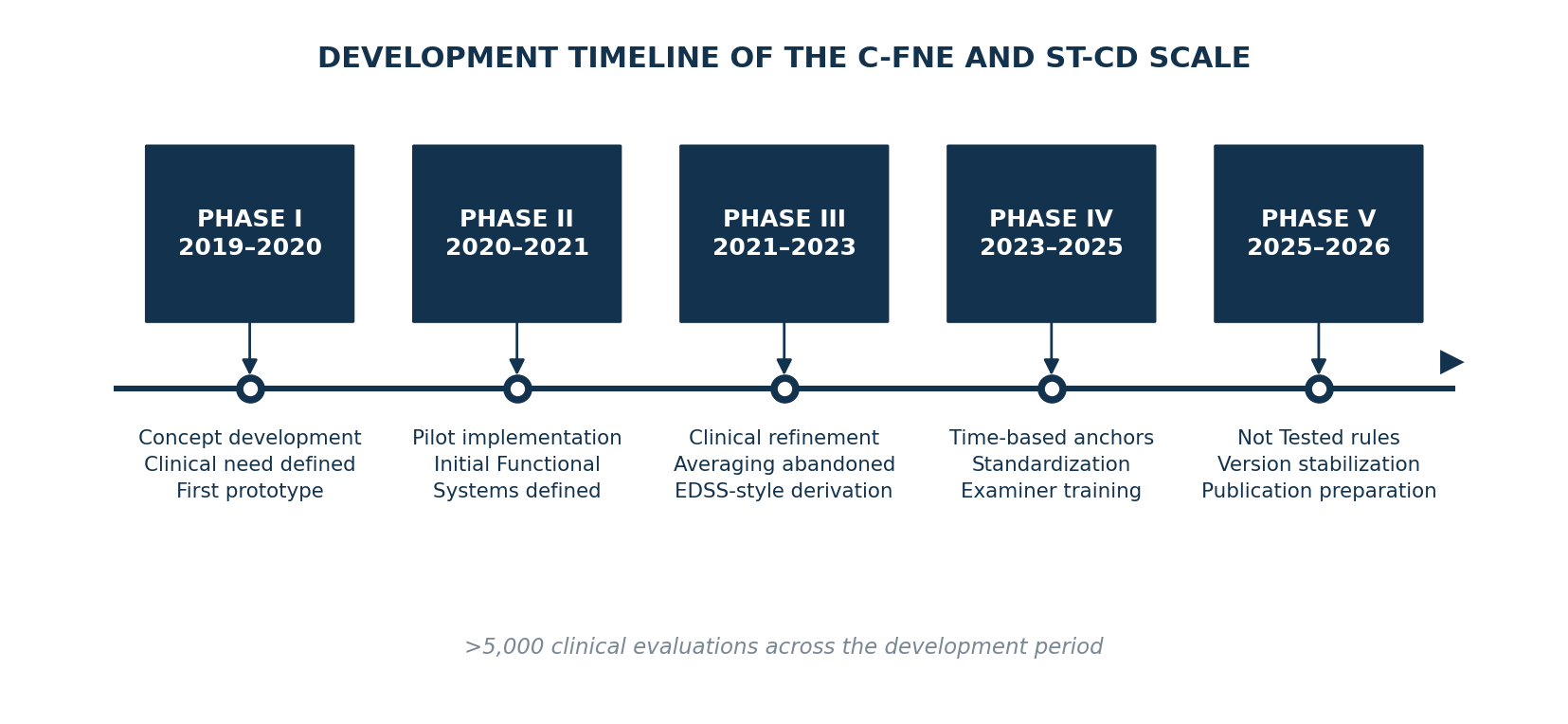
Five phases are distinguishable in retrospect. The phase boundaries were not planned in advance; they are identified here by the substantive change that closed each one.
Figure 3. Development timeline of the C-FNE and the ST-CD Scale. Phase dates require confirmation against the practice’s internal version records before submission.
Phase I — Concept development
The initial phase established the clinical need described in Section 4.1, surveyed the existing concussion assessment literature and the established neurological disability instruments, and produced a first prototype consisting of a fixed examination battery with a global clinician severity impression appended. The prototype was used clinically from the outset; it was never a paper exercise.
Phase II — Pilot implementation and initial functional systems
The second phase introduced the concept of separately graded functional systems, replacing the single global impression with a set of domain grades. The domain set at this stage was narrower than the current nine and was assembled around vestibular, oculomotor, balance, and cognitive function. Scoring at this stage combined the domain grades by averaging.
Phase III — Abandonment of averaging
The third phase produced the most consequential single change in the development of the instrument. Averaging was abandoned after repeated observation that it produced scores contradicting the observed function of patients with severe single-system involvement. The EDSS-style derivation described in Section 7.3 — in which the highest domain grades and the number of involved domains jointly determine the global score — was adopted in its place, and the domain set was expanded toward its present composition.22
Phase IV — Anchoring and standardization
The fourth phase replaced adjectival severity descriptors with the time-and-capacity anchors described in Section 7.2, after referring providers, therapists, and non-clinical readers were found to be interpreting the same descriptor differently. This phase also introduced examiner standardization, the requirement that departures from the derived score be documented, and formal version control of the scoring rules.
Phase V — Not Tested rules and stabilization
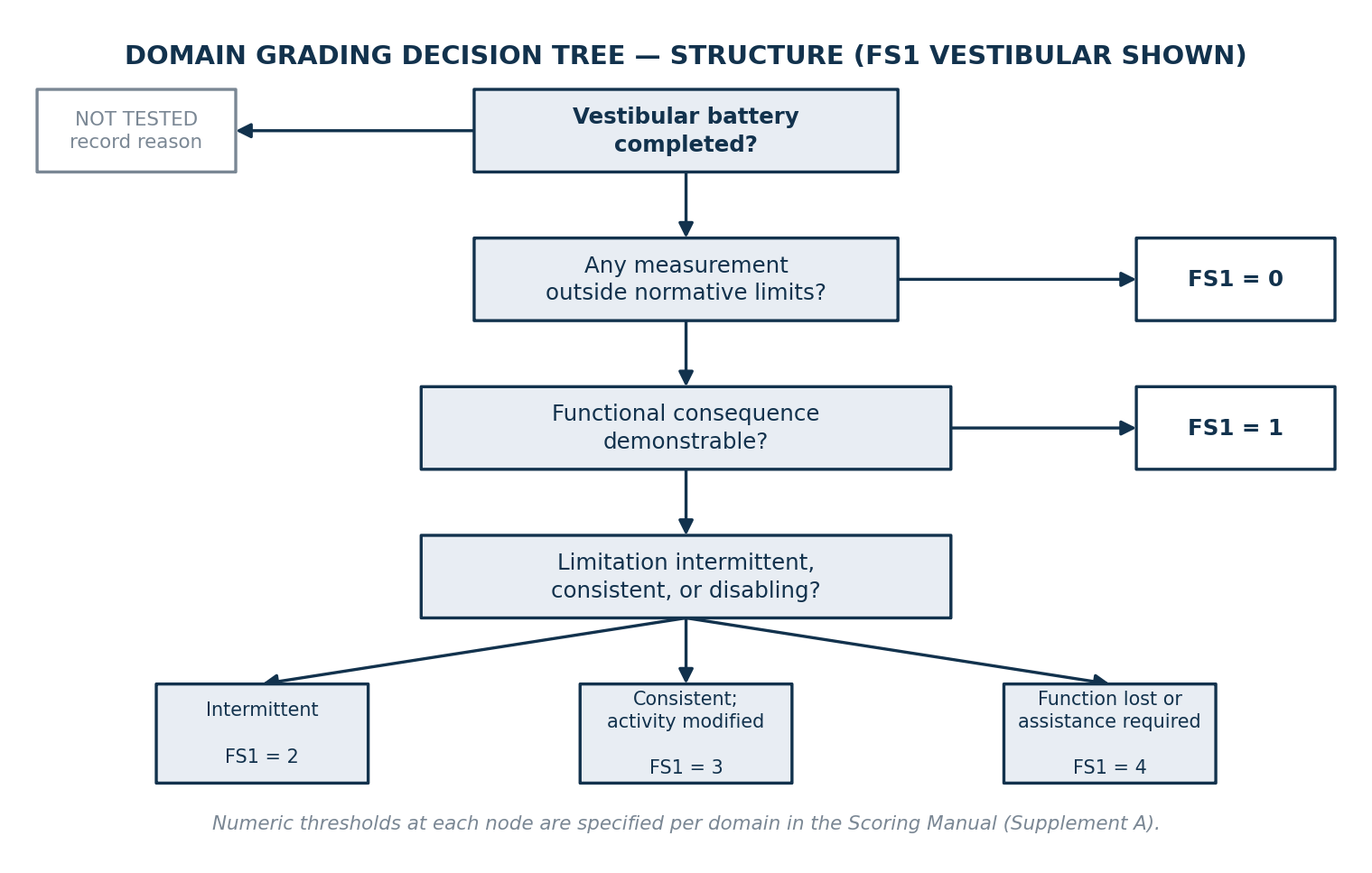
The final phase addressed the systematic underestimation of disability in patients unable to complete the examination battery, introducing the formal Not Tested status and the associated global-scoring rules described in Section 7.7. The scoring rules were then frozen for the purpose of preparing this manuscript and the validation programme; no substantive change has been made since stabilization, and any subsequent change will be issued as a numbered version.
Version Control
The scoring rules are maintained under formal version control. Each version carries a number, an effective date, a statement of what changed, and the rationale for the change. Scores are recorded against the version under which they were assigned, so that scores generated under different versions are not silently compared. This practice began during Phase IV; scores generated before that point are not version-identified and should not be pooled with later scores for research purposes.
Summary of Phase Transitions
The ST-CD Scale did not appear in its present form. The table below records the four substantive scoring changes, each driven by a specific failure of the preceding version.
Table 4. Development phases of the ST-CD Scale and the problem each phase addressed.
Phase
Approach
Problem identified in routine use
Change made
I (initial)
Global clinician severity impression, 0–10
Comparable patients received scores differing by two or more points depending on the examiner; severity could not be defended when questioned
Score required to be derived from documented examination findings rather than assigned globally
II
Unweighted average of domain findings
Averaging diluted severe single-system dysfunction: a patient with profound vestibular loss and otherwise normal systems scored as mildly disabled, contrary to observed function
Averaging abandoned; adopted an EDSS-style derivation in which the highest domain grades and the number of involved domains jointly determine the global score22
III
EDSS-style derivation with descriptive severity words
Severity adjectives (“moderate,” “severe”) were interpreted differently by referring providers, therapists, and non-clinical readers
Every global step anchored to an explicit statement of the proportion of waking time functionally impacted and the corresponding functional capacity
IV (current)
Anchored derivation with defined handling of untested domains and mandatory clinician confirmation
Aborted or incomplete testing (symptom intolerance, calibration failure, deferred cognitive testing) produced spuriously low scores when missing domains were scored as normal
Formal “Not Tested” status introduced; rules specified for when a global score may and may not be reported (Section 7.6)
Phase IV also incorporated a set of internal consistency rules derived from repeated observation, intended to reduce systematic under-detection. Examples include the requirement that any abnormal ocular-motor measurement anywhere in the battery be reflected in the oculomotor domain regardless of whether the patient reports visual symptoms; that objectively abnormal postural control be reflected in the balance domain regardless of self-reported steadiness; and that documented insomnia be evaluated together with fatigue and cognitive complaint, given their consistent co-occurrence. These rules exist because the alternative — permitting the absence of a self-reported symptom to override an objective abnormality — reintroduces precisely the subjectivity the framework was built to eliminate.
Accumulated Clinical Experience
The framework has been applied in more than 5,000 patient evaluations across a multi-state outpatient practice over approximately seven years. This experience informed domain selection, threshold placement, the handling of incomplete testing, and the wording of the anchors. It should be understood for what it is and what it is not. It is a substantial body of applied clinical use that has exposed the framework to a wide range of presentations, ages, injury mechanisms, and comorbidities, and that has driven successive correction of the instrument. It is not a validation dataset. The evaluations were performed for clinical purposes under routine conditions, without a predefined research protocol, without independent duplicate scoring for reliability estimation, and without prospectively collected reference-standard outcomes. No inferential claims are made from this experience, and none should be drawn from it. The validation program required to convert clinical experience into psychometric evidence is specified in Section 12.0.
Statement on data. No patient-level data, outcome statistics, accuracy estimates, or reliability coefficients are reported in this manuscript. Where the volume of clinical application is described, it is offered solely as a statement of development context.
Design Decisions and Alternatives Considered
Every scale embodies a series of choices, and a scale whose choices are undocumented is difficult to evaluate and impossible to improve deliberately. This section states each substantive design decision, the reasoning behind it, and the cost accepted in making it. It then sets out the alternative approaches that were considered and the grounds on which each was rejected.
The decisions are presented with their trade-offs rather than as unqualified merits. Every one of them purchases something at a price, and a reviewer who identifies the price has not found a flaw the authors overlooked.
Summary of Design Decisions
Table 5. Principal design decisions, rationale, and accepted cost.
Decision
Rationale
Alternative rejected
Cost accepted
Nine functional systems
Covers the systems with documented involvement after cTBI, each with an available objective measure and a distinct rehabilitative pathway
Fewer domains (3–5); more domains (12+)
Examination burden of 90–150 minutes; incomplete batteries are common
0–4 domain grading
Five levels distinguish measurable-but-silent from intermittent, consistent, and disabling involvement without exceeding the resolution the underlying measurements support
Binary normal/abnormal; 0–6 as in some EDSS systems
Coarser than the underlying continuous measurements
Global range 0–10
Preserves structural comparability with the EDSS and with the 0–10 severity conventions already familiar to clinicians
0–100; 0–6 categorical
The upper range is rarely used in concussion
0.5 increments
Provides resolution sufficient to register clinically meaningful change on serial examination without implying precision the gradings cannot support
Whole-point steps; continuous scoring
Twenty-one levels invite over-interpretation of small differences
Composite rather than profile alone
A single value is required for communication, triage, trend display, and administrative use
Domain profile only
Aggregation obscures the profile unless reporting is constrained (Section 7.8)
Derivation by highest grade and number of domains
Reproduces the EDSS principle that focal severe and diffuse mild involvement can yield comparable disability by different routes
Unweighted average; weighted sum
Rules are consensus-derived rather than empirically weighted
Anchoring to proportion of time impacted
Time-and-capacity statements are answerable from documented activity tolerance; severity adjectives are not
Adjectival anchors; symptom-count anchors
Requires a functional history of adequate quality
Mandatory clinician assignment
Preserves accountability and permits documented departure where the derivation does not fit the patient
Fully algorithmic scoring
Introduces a source of variance that must be measured, not assumed away
Formal Not Tested status
Prevents the systematic underestimation of disability in patients too symptomatic to complete the battery
Imputation; scoring omissions as normal
Global score is unavailable in some examinations
Ordinal treatment
The composite cannot support interval claims without empirical demonstration
Continuous or interval scoring
Constrains statistical analysis to non-parametric methods
Why Nine Functional Systems
The number nine was an outcome rather than a target. Domains were admitted if they satisfied four criteria simultaneously: documented frequency of involvement after cTBI; availability of an objective or semi-objective measure suitable for routine outpatient use; a distinct rehabilitative pathway, such that identifying the domain changes what is done for the patient; and non-redundancy with domains already admitted.
Fewer domains were considered. A three- to five-domain instrument covering vestibular, oculomotor, cognitive, and balance function would be substantially faster to administer and would capture the presentations most characteristic of concussion. It was rejected because it would systematically miss the patient whose disability is driven by post-traumatic headache with photophobia, or by insomnia and anxiety, and because those presentations are common and are among the most functionally limiting.
More domains were also considered. Candidate additions included autonomic cardiovascular function as a separate domain from headache, olfactory function, sleep architecture as distinct from insomnia severity, and vocational capacity as distinct from general participation. Each was rejected on grounds of measurement burden, absence of a routinely available objective measure, or redundancy with an admitted domain. Two candidates were rejected on construct grounds: isolated musculoskeletal pain, because it is frequently attributable to concurrent non-neurological injury and would confound the neurological construct; and symptom burden as such, for the reasons given in Section 1.2.2.
Why This Grading Structure
Why 0–4 rather than binary. A binary normal/abnormal classification would be maximally reproducible and minimally informative. It cannot distinguish the patient with a measurable caloric asymmetry who functions normally from the patient whose vestibular dysfunction has ended their ability to drive, and that distinction is the entire clinical question.
Why five levels rather than more. Grading resolution should not exceed the reliability of the underlying judgment. Five levels — absent, measurable but silent, intermittent, consistent, and disabling — correspond to distinctions that examiners can be trained to make consistently. Seven-level grading was piloted informally and abandoned when adjacent categories proved not to be reliably separable.
Why 0.5 global increments. Whole-point steps across a 0–10 range give eleven levels, which is too coarse to register the improvement typically observed between monthly reassessments; a patient may improve materially without crossing a whole-point boundary. Continuous scoring was rejected under Section 3.4. Half-point steps give twenty-one levels, which matches both the resolution of the derivation rules and the convention of the antecedent instrument.22 The accepted cost is the temptation to over-interpret single-step differences, which Section 8.3 addresses directly.
Why a Composite Score At All
The strongest argument against a composite is that it discards information: nine grades contain more than one number does. That argument is correct, and the framework accepts it — which is why Section 7.8 requires that the profile always accompany the score.
The argument for the composite is practical rather than theoretical. Communication, triage, trend display, care coordination, and administrative decision-making all require a single value; where clinicians do not supply one, others construct one informally and without rules. The choice is not between a composite and no composite. It is between a composite whose derivation is documented and a composite assembled ad hoc by whoever needs a number.
Why Clinician Assignment Rather Than Pure Algorithm
A fully algorithmic score would be perfectly reproducible, and reproducibility is not the same as validity. Algorithms fail predictably at the boundaries of their design: the patient with documented pre-existing vestibular disease, the patient whose participation is limited by a concurrent orthopaedic injury, the patient for whom normative reference data do not apply. In each case a rule-derived score would be defensible and wrong.
The framework retains the clinician as the final authority and requires that any departure from the derived value be recorded with its reason. This is the same structure adopted by standardized neurological scoring systems that combine defined examination rules with certified rater judgment.28 It converts clinician variance from an invisible property of the instrument into a measurable and auditable one — and the inter-rater study specified in Section 12.2 is designed to measure exactly that.
Why Time-Based Anchors
Severity adjectives do not survive transfer between readers. “Moderate” is interpreted differently by a neurologist, a physical therapist, a claims adjuster, and a patient, and the differences are systematic rather than random. Anchoring each global step to the proportion of waking time during which function is materially impacted replaces an adjective with a question that can be answered from documented activity tolerance, work status, driving status, and examination findings.
The approach borrows from the FIM’s use of observable performance and required assistance as grade anchors rather than severity descriptors.25,26 Its cost is a dependence on the quality of the functional history: where that history is thin, the anchor cannot discriminate, and the derivation must carry the score alone. This is a genuine weakness and is stated in Section 11.0.
Alternatives Considered and Rejected
The following approaches were evaluated during development. Each is a reasonable option, several are in widespread use, and the grounds for rejection are specific to the construct defined in Section 3.1 rather than to any deficiency in the instruments themselves.
Table 6. Alternative approaches considered during development and grounds for rejection.
Alternative
What it would have provided
Grounds for rejection
Symptom inventories alone (PCSS, RPQ, SCAT)16,53
Rapid, validated, low-burden serial measurement of the patient’s experience
Measures perception rather than function; correlates only modestly with objective performance; vulnerable to contextual and incentive effects. Retained as context alongside the score, not as a scored domain
Structural or diffusion imaging
Objective, quantitative, widely accepted as evidence
Frequently normal in concussion; DTI lacks standardized acquisition, normative databases, and individual-level interpretability. Complements rather than measures function12–15
Neuropsychological testing alone
Deep, normatively referenced characterization of cognition
Misses vestibular, oculomotor, postural, autonomic, and participation dysfunction entirely; a patient may be cognitively intact and severely disabled
A single validated screening tool (VOMS)16
Brief, validated, sensitive to vestibulo-ocular provocation
Designed as a screening instrument for a specific system; provokes symptoms rather than quantifying function; not constructed to support a global disability statement
Self-report instrument confined to dizziness-related handicap; does not span the domain set and reintroduces the symptom-report limitations above
Machine-learning derived score
Empirically optimized weighting; potentially superior predictive accuracy
Requires a large labelled dataset with a reference standard that does not currently exist; produces weights that cannot be explained to a patient, a therapist, or a court. Deferred, not excluded — appropriate once the validation dataset exists
Weighted or unweighted average of domain grades
Simple, transparent, arithmetically defensible
Averaging dilutes severe single-system dysfunction; a patient with profound vestibular loss and eight normal domains scores as mildly disabled, contrary to observed function. Empirically abandoned in Phase II (Section 4.6)
Continuous 0–100 scoring
Fine resolution; supports parametric analysis
Encodes an interval-measurement claim the composite cannot support; implies precision the domain grades do not possess41,55
Adoption of an existing scale (GOS-E, mRS, FIM)24–26,31
Established, validated, familiar, comparable across studies
Ceiling effects place nearly all concussion patients in the top one or two categories; none resolves the domain profile required to direct treatment
Two of these decisions are explicitly provisional. Machine-learning derivation of domain weights is deferred rather than rejected, and becomes appropriate once the predictive validity cohort described in Section 12.1 provides labelled outcome data. Interval transformation of the ordinal structure is likewise deferred pending the Rasch analysis described in Section 12.3. In both cases the current design is the defensible position given present evidence, not a permanent commitment.
How the ST-CD Scale Relates to Existing Instruments
The framework is not proposed as a replacement for the instruments in current use. The relationship is one of scope: existing tools answer narrower questions well, and the ST-CD Scale answers a question none of them was built to address.
Table 7. Scope of instruments in current concussion practice compared with the C-FNE and the ST-CD Scale.
Does vestibulo-ocular provocation reproduce symptoms?
Provoked symptom report
Vestibulo-ocular
No
Partly
Yes
DHI54
How handicapping is the dizziness?
Self-report
Dizziness handicap
No
Partly
Yes
CT / MRI9–11
Is there structural injury?
Imaging
Structure only
No
Rarely
Yes
DTI12–15
Is white matter microstructure altered?
Imaging
Structure only
No
No
Research use
Posturography20,21,50
How stable is postural control?
Instrumented
Balance
No
Yes, within domain
Yes
Computerized cognition34,51
How efficient is cognition?
Instrumented
Cognition
No
Yes, within domain
Yes
C-FNE
Which systems are dysfunctional, and how much?
Instrumented, multidomain
Nine functional systems
Provides the inputs
Yes
Not yet
ST-CD Scale
What is the overall magnitude of current disability?
Derived composite
Nine functional systems
Yes
Yes, via the profile
Not yet
The final column is the one that matters most in evaluating this manuscript. Every established instrument in the table carries published validation evidence; the two instruments proposed here do not. That asymmetry is the reason the validation programme in Section 12.0 is specified in the detail that it is, and the reason the framework is described throughout as investigational.
The Comprehensive Functional Neurological Evaluation
The ST-CD Scale cannot be understood independently of the examination that generates its inputs. A scale is only as good as the measurements it aggregates, and a reader evaluating the ST-CD Scale is entitled to know, in detail, where its numbers come from. This chapter describes the C-FNE: its origin, its design philosophy, its relationship to the conventional neurological examination, its content, its standardization, and the ways in which it differs from routine cTBI evaluation.
The C-FNE is a standardized, sequenced, multidomain neurological evaluation performed in a single outpatient session, typically requiring 90 to 150 minutes depending on patient tolerance.
Origin and Rationale of the Designation
During development of the examination framework, the authors introduced the term Comprehensive Functional Neurological Evaluation (C-FNE) to describe the standardized multidomain examination protocol developed for the objective assessment of patients with cTBI. The designation distinguishes the examination from conventional neurological examinations by emphasizing its standardized integration of vestibular, oculomotor, balance, cognitive, cranial nerve, motor, autonomic, psychological, and functional participation assessments into a single examination framework.
The components of the designation were selected to describe the examination accurately rather than to differentiate it commercially, and each carries a specific meaning within this framework.
Table 8. Components of the C-FNE designation and what each denotes.
Term
What it denotes
Comprehensive
The multidomain nature of the examination: nine functional systems assessed within a single session under a single protocol, rather than a battery assembled ad hoc from separately ordered tests
Functional
That the examination evaluates neurological function rather than structural pathology — the distinction developed in Sections 1.2.1 and 2.1, and the reason the examination has diagnostic value where imaging is normal
Neurological
That the assessment is of the nervous system, distinguishing it from orthopaedic, musculoskeletal, and symptom-inventory-based examinations that may be performed on the same patient for other purposes
Evaluation
The integration of multiple objective examination procedures into a unified assessment yielding a single interpretive output, rather than a set of independently reported test results
Purpose and Design Philosophy
The C-FNE was constructed to answer one question with as little ambiguity as possible: which neurological systems are dysfunctional in this patient, and to what degree? Every design feature follows from that question.
It is diagnostic of dysfunction, not of injury. The examination characterizes the functional state of the nervous system. It does not establish that a concussive event occurred, and it does not attribute the findings to any particular event; both remain clinical determinations made on the whole record (Sections 8.1 and 9.6).
It is designed for the subacute presentation. Sideline and emergency-department instruments are optimized for rapid triage and removal-from-play decisions in the minutes to hours after injury. The C-FNE is optimized for the patient presenting weeks to months later, in whom the question is no longer whether to remove from activity but which systems remain impaired and what should be done about them.
It is designed to be performed identically by different examiners. Test order, instructions, setup, stopping rules, and documentation are specified. Where a choice existed between a more sensitive procedure that varied by examiner and a more reproducible procedure that did not, the reproducible procedure was selected (Section 4.2).
It is designed to produce numbers, not impressions. Each domain yields a quantitative or threshold-referenced output. This is what permits the examination to feed a scoring model at all; an examination reported in narrative alone cannot support one.
It is designed to survive scrutiny. Calibration status, protocol adherence, deviations, and incomplete measurements are recorded on the face of the report rather than omitted. An examination whose limitations are documented is more defensible than one that appears seamless.
Relationship to the Conventional Neurological Examination
The C-FNE does not replace the conventional neurological examination and is not an alternative to it. It presupposes it. A standard history, general neurological examination, and appropriate imaging remain the basis for identifying the pathology that must not be missed — haemorrhage, mass lesion, cervical spine injury, focal deficit indicating a localizable lesion. Where such findings are present, the C-FNE is not the relevant next step.
What the C-FNE adds is resolution in the region where the conventional examination is least informative. The bedside neurological examination is a highly efficient instrument for detecting focal structural pathology and a comparatively insensitive one for detecting the distributed functional dysfunction that characterizes cTBI. A patient may have entirely normal strength, reflexes, sensation, gait, and cranial nerve examination and still demonstrate a substantial caloric asymmetry, reduced pursuit gain, posturographic instability under degraded sensory conditions, and processing speed two standard deviations below normative expectation. The conventional examination is not wrong in such a patient; it is being asked a question it was not built to answer.
How the C-FNE Differs from Routine cTBI Evaluation
Most patients with cTBI receive some combination of symptom inventory, brief cognitive screening, and vestibulo-ocular screening, frequently across several appointments and several providers. The differences between that pattern and the C-FNE are procedural rather than conceptual, and they are the differences that determine whether the output can support a scoring model.
Table 9. Procedural differences between routine cTBI evaluation and the C-FNE.
Dimension
Routine evaluation
C-FNE
Composition
Assembled from separately ordered tests, often across providers and visits
Fixed protocol performed in a single session under one supervising clinician
Test order
Determined by scheduling and availability
Standardized to control fatigue effects and to place provocative testing after measures it would contaminate
Domain coverage
Driven by presenting complaint; asymptomatic domains frequently untested
All nine domains assessed regardless of presenting complaint, so silent dysfunction is detected
Output
Separate reports interpreted independently
Integrated profile with cross-domain consistency examined explicitly (Section 6.8)
Missing data
Typically unrecorded; an untested domain is indistinguishable from a normal one
Formally recorded as Not Tested with classified reason (Section 7.7)
Quality control
Variable and often undocumented
Calibration status, protocol adherence, and deviations documented on the report
Interpretive endpoint
Clinician synthesis, unwritten
Domain grades and a derived global score with the derivation stated (Section 7.0)
None of these differences implies that routine evaluation is performed poorly. They reflect a different purpose: routine evaluation is organized around answering the patient’s presenting complaint, and the C-FNE is organized around producing a complete and comparable measurement set.
Examination Sequence
Test order is standardized for two reasons: to control for fatigue effects on performance-based measures, and to ensure that provocative testing is performed after measures that would be contaminated by symptom exacerbation. The general sequence proceeds from history and symptom documentation, to cranial nerve and sensorimotor examination, to computerized cognitive testing, to instrumented posturography, to the videonystagmographic battery with positional and caloric testing performed last, to quantitative strength testing, and finally to the standardized psychological and functional-impact instruments.
Because provocative vestibular testing may exacerbate symptoms, it is placed after cognitive testing rather than before it. Any deviation from the standard sequence, and any test not completed, is recorded on the face of the report, because both affect the interpretation of the resulting score.
Functional Systems, Measures, and Grading Thresholds
Each of the nine functional systems is graded from 0 to 4 on the basis of the measurements obtained. Grade 0 denotes performance within normative limits. Grade 1 denotes a measurable abnormality without demonstrable functional consequence. Grade 2 denotes abnormality producing intermittent limitation of function. Grade 3 denotes abnormality producing consistent limitation requiring modification of activity. Grade 4 denotes abnormality producing loss of the function or dependence on assistance. A tenth possibility, NT (Not Tested), is recorded when the measurement could not be obtained; NT is never scored as 0.
Table 10. The nine ST-CD functional systems, their principal objective measures, and the domain construct graded.
FS
System
Principal objective measures
Construct graded 0–4
FS1
Vestibular function
Videonystagmography: spontaneous and gaze-evoked nystagmus, Dix–Hallpike and positional testing, caloric responses and unilateral weakness calculation
Degree of peripheral and/or central vestibular dysfunction and its provoked functional consequence
FS2
Oculomotor function
Recorded smooth pursuit gain, saccadic accuracy and latency, optokinetic response, gaze stability, convergence and accommodation assessment
Degree of impairment of visual tracking, fixation, and near-work tolerance
FS3
Postural control and balance
Instrumented force-platform posturography across standardized stance conditions; composite stability score
Degree of postural instability and fall risk under progressively reduced sensory input
FS4
Cognitive processing
Computerized testing of attention, processing speed, working memory, verbal and visuospatial memory, and executive tasks, normatively referenced
Degree of impairment of cognitive efficiency relative to normative expectation
FS5
Cranial nerve and sensory function
Structured cranial nerve examination; visual field, pupillary, extraocular, facial sensory and motor, auditory and vestibulocochlear screening; dermatomal sensory testing
Degree of cranial nerve and sensory dysfunction
FS6
Motor and strength function
Quantitative grip dynamometry with side-to-side comparison; segmental strength testing; coordination and fine motor performance
Degree of motor weakness, asymmetry, or incoordination
FS7
Autonomic and headache function
Headache frequency, duration and provocation profile; photophobia and phonophobia documentation; orthostatic and exertional tolerance assessment
Degree to which headache, sensory sensitivity, and autonomic intolerance restrict sustained activity
FS8
Psychological and behavioral function
Validated brief instruments for anxiety, depression, traumatic stress, and insomnia severity, scored to published cut-points43–46
Degree of psychological and sleep dysfunction affecting neurological recovery and function
FS9
Activities of daily living and participation
Validated functional-impact instrument covering work, social, and domestic functioning; documented work, school, and driving status
Degree of restriction in real-world participation
Because the ST-CD Scale is a formative composite (Section 3.3), the defensibility of the instrument rests substantially on whether the domain set is complete and non-redundant. Each domain is therefore argued individually below: what it measures, why cTBI disrupts it, why it is separable from the others, and what its inclusion changes about the patient’s care.
FS1 — Vestibular function
The peripheral vestibular apparatus and its central connections through the vestibular nuclei, cerebellum, and vestibulo-ocular and vestibulospinal pathways are among the structures most vulnerable to the rotational and linear accelerations that produce concussion. Otoconial displacement generates post-traumatic benign paroxysmal positional vertigo; shear and inflammatory injury to central vestibular pathways produces gaze instability, motion intolerance, and impaired sensory reweighting.49,57,58 Vestibular dysfunction is quantifiable by caloric and positional testing, is among the most common objective findings after cTBI, and is directly rehabilitable through canalith repositioning, gaze stabilization, and habituation.33,48,59 It is separable from FS3 in that a patient may have a normal vestibular examination with impaired postural control from proprioceptive or central integrative causes, and the therapeutic implication differs accordingly.
FS2 — Oculomotor function
Ocular motility depends on widely distributed circuitry — brainstem burst generators, cerebellar vermis, frontal and parietal eye fields, and the dorsolateral prefrontal cortex — which makes recorded eye movement an unusually sensitive index of diffuse network disruption.60 Convergence insufficiency, accommodative dysfunction, saccadic dysmetria, and reduced pursuit gain are documented in a substantial proportion of patients after cTBI, particularly adolescents, and account for much of the near-work and screen intolerance that limits return to school and to office-based work.60,61 The domain is separable from FS4 because oculomotor dysfunction impairs the delivery of visual information to cognitive systems that may themselves be intact, and separable from FS1 because central oculomotor abnormality occurs with entirely normal peripheral vestibular function.
FS3 — Postural control and balance
Postural stability requires continuous integration of vestibular, visual, and somatosensory input with cerebellar and brainstem motor output, and the reweighting of those inputs when one becomes unreliable.20,21 Concussion impairs this integrative process rather than any single input, which is why instrumented posturography under progressively degraded sensory conditions detects dysfunction that observational balance testing does not.50,62,63 The domain carries direct safety implications — fall risk, driving, work at height, return to contact activity — and is separable from FS1 and FS6 because the deficit lies in integration rather than in any contributing channel.
FS4 — Cognitive processing
The neurometabolic cascade following cTBI, together with disruption of long white-matter association tracts and of the frontoparietal and salience networks, produces a characteristic pattern of reduced processing speed, impaired sustained and divided attention, and reduced working-memory capacity.64–66 These deficits are frequently the limiting factor for occupational and academic function even when the patient is physically well, and they respond to structured cognitive rehabilitation and graded cognitive loading.34,67 Normatively referenced computerized testing makes the domain quantifiable at the individual level.51
FS5 — Cranial nerve and sensory function
The mechanism that produces cTBI frequently produces concurrent injury to cranial nerves at their skull-base exits and to cervical roots and peripheral nerves — olfactory disruption, trigeminal sensory change, facial weakness, auditory and vestibulocochlear involvement, and cervical radicular findings.35,68,69 These findings are separable from the diffuse network dysfunction indexed by FS2 and FS4, are localizable, and materially change the differential diagnosis and the referral pathway. Their exclusion would leave a category of objectively demonstrable neurological injury unrepresented in a scale that claims to measure neurological disability.
FS6 — Motor and strength function
Motor findings after cTBI arise from several sources: corticospinal and cerebellar dysfunction, cervical and peripheral nerve injury sustained in the same event, and disuse. Quantitative dynamometry with side-to-side comparison, together with coordination and fine motor testing, provides an objective and reproducible measure with established normative reference values.52 The domain is retained despite the relative infrequency of severe motor findings in uncomplicated cTBI, because when such findings are present they are functionally decisive and because their objectivity is difficult to dispute.
FS7 — Autonomic and headache function
Post-traumatic headache is the most prevalent persistent symptom after cTBI and has a distinct pathophysiology involving trigeminovascular activation and central sensitization.36 It travels with photophobia, phonophobia, and exertional and orthostatic intolerance, the last reflecting disturbance of autonomic cardiovascular regulation and of cerebral autoregulation.70,71 This domain frequently determines how long a patient can sustain any activity at all, and it responds to specific intervention — headache management and graded subthreshold aerobic reconditioning — that differs entirely from vestibular or cognitive rehabilitation.42 A scale omitting it would misclassify the patient whose objective testing is otherwise near-normal but who cannot tolerate more than an hour of activity.
FS8 — Psychological and behavioural function
Anxiety, depression, traumatic stress, and insomnia are not merely reactions to concussion; they are among the most consistently identified predictors of prolonged recovery, and insomnia in particular exerts a measurable effect on cognitive and vestibular performance.72–75 Each is measurable with a brief validated instrument scored against published cut-points, which makes the domain gradable by rule rather than by impression.43–46 Its inclusion is also a safeguard: without it, a patient whose disability is predominantly psychological and sleep-related would receive a low score from an instrument that had never looked.
FS9 — Activities of daily living and participation
The preceding eight domains measure impairment. This domain measures participation, and the ICF framework is explicit that the two are distinct and that neither predicts the other reliably.27 Its inclusion serves two functions within the scale. Substantively, it ensures that the construct defined in Section 3.1 — disability, not laboratory abnormality — is directly represented. Procedurally, it provides the independent check used in anchor reconciliation (Section 7.4), where participation is compared against the impairment-derived score and material disagreement between them is treated as a finding rather than smoothed away.
Domain grading thresholds are specified in the C-FNE scoring manual in terms of the measured quantity. Two illustrative conventions indicate the level of specificity intended. In the postural control domain, a composite posturographic stability score below the normative threshold constitutes an abnormal finding, with the magnitude of the deficit and the pattern of failure across sensory conditions determining whether the grade is 2, 3, or 4. In the psychological domain, grades follow the published severity cut-points of the constituent instruments rather than clinician impression, so that a moderate score on a validated anxiety instrument produces the same domain grade irrespective of examiner.
Standardization and Quality Control
Reproducibility depends on procedures that are frequently left implicit. The following are specified and documented for every examination.
Calibration. Each instrument is calibrated according to manufacturer specification, and the calibration status and date are recorded with the examination. An examination performed on an instrument outside calibration is reported as such, and the affected domain is treated as Not Tested.
Environmental conditions. Lighting, ambient noise, and platform setup are standardized, as several measures — particularly oculomotor recording and posturography — are sensitive to conditions that are easy to vary without noticing.
Patient state. Time since injury, time of day, sleep the preceding night, current medications with timing, caffeine, and symptom level at the start of the examination are recorded, because each can shift performance-based measures independently of the underlying dysfunction.
Instruction scripts. Task instructions are scripted rather than paraphrased, since instruction wording measurably affects performance on attention and pursuit tasks.
Stopping rules. The conditions under which a test is terminated for symptom provocation are defined in advance rather than left to in-session judgment, and the termination point is recorded.
Artifact handling. Recordings containing artifact are identified, and the affected measurement is either repeated or recorded as Not Tested. Artifact-contaminated data are not graded.
Documentation. Every measurement obtained, every measurement not obtained, and every deviation from protocol appears on the report (Section 9.5).
These procedures are stated here because they are the substance of what makes an examination standardized, and because a reviewer or opposing expert evaluating the framework will ask about each of them. They are specified in full in the examiner manual (Supplement B), which has not yet been published; until it is, the claim of standardization rests on internal documentation rather than on material an independent party can inspect.
Cross-Domain Triangulation
A methodological feature of the C-FNE, and one of the principal arguments for a multidomain examination over any single test, is that the component assessments overlap physiologically and can therefore be cross-checked against one another. Every individual neurological test carries limitations and, standing alone, a degree of diagnostic uncertainty. Vestibular dysfunction identified on caloric testing predicts a characteristic pattern of posturographic failure; oculomotor abnormality on recorded pursuit predicts reduced performance on visually mediated cognitive tasks; cranial nerve findings should correspond to the sensory distribution reported.
When findings converge, confidence in the profile increases. When they diverge — for example, when severe self-reported dysfunction accompanies uniformly normal instrumented measurement, or when a single isolated abnormality appears without any physiologically related finding — the divergence is documented explicitly and the examination is interpreted with corresponding caution. Divergence is informative rather than embarrassing, and recording it is part of the method.
Incomplete and Untestable Examinations
Incomplete examinations are common in this population and are a genuine methodological problem. Patients may be unable to tolerate caloric irrigation, may terminate positional testing because of provoked migraine, may fail oculomotor calibration, or may have cognitive testing deferred to a subsequent visit. Early versions of the framework treated missing measurements as normal, which systematically underestimated disability in precisely the most symptomatic patients — those too symptomatic to complete the battery.
The current framework requires that any measurement not obtained be recorded as Not Tested, with the reason stated. Not Tested is not a grade of 0, is not imputed, and is displayed on the report. The consequences for global scoring are specified in Section 7.7.
Relationship to the ST-CD Scale
The C-FNE and the ST-CD Scale are distinct components with distinct failure modes, as set out in Section 3.5. The relationship is worth restating at the close of this chapter because it is the point most frequently lost: the C-FNE is the examination; the ST-CD Scale is what is done with its output. The examination has clinical value with no score attached — it identifies which systems are dysfunctional and directs treatment accordingly, and a clinician who performs it and never computes a global score has still learned what they needed to know. The scale, by contrast, has no meaning without a completed examination, cannot be estimated from records, and cannot be assigned by anyone who did not measure the patient (Section 9.6).
This asymmetry has a practical implication for how the framework should be evaluated. A reader who is unpersuaded by the scoring model may still find the examination protocol useful, and the two claims should be assessed separately.
The Short-Term Concussion Disability Scale
Architecture
The ST-CD Scale is a two-level ordinal instrument, structurally modeled on the EDSS.22 At the first level, nine Functional System Scores are graded 0 to 4 from the objective measurements described in Section 6.6. At the second level, those grades are converted, by explicit rule, into a single global score ranging from 0 to 10 in 0.5-point increments. Six interpretive category bands are layered over the numeric continuum to support communication with non-specialist readers.
Three features distinguish the ST-CD Scale from its antecedent. First, its Functional System Scores are derived from instrumented measurement rather than from bedside examination alone. Second, its global steps are anchored to a stated proportion of waking time during which function is materially impacted, rather than to ambulatory capacity, because ambulation is rarely the limiting factor after cTBI. Third, it is explicitly a short-term state measure rather than a longitudinal disease-course measure.
Figure 4. Construction of an ST-CD score. Steps 1 and 2 are measurement; step 3 is rule-based derivation; steps 4 and 5 are documented clinical judgment; step 6 is the reporting constraint stated in Section 7.8.
Anchoring Principle
Each global step is defined by two statements: the proportion of the patient’s waking time during which neurological dysfunction materially affects function, and the corresponding capacity for work, study, driving, and independent daily activity. The time-based anchor exists to eliminate the interpretive drift that severity adjectives invariably produce. Two clinicians may disagree about whether a presentation is “moderate”; they are far less likely to disagree about whether a patient is functionally impacted for roughly a quarter or roughly half of the waking day, because that question is answerable from documented activity tolerance, work status, and examination findings.
Table 11. ST-CD global scale: steps, anchors, and category bands. Percentages refer to the proportion of waking time during which neurological dysfunction materially affects function.
Score
Category band
Time impacted
Functional anchor
0
No disability
0%
All nine functional systems within normative limits. No activity restriction. Full participation in work, study, driving, and physical activity.
0.5
Slight
<5%
Isolated measurable abnormality in one system without demonstrable functional consequence. Full participation maintained.
1.0
Slight
≈5–10%
Measurable abnormality in one or more systems producing brief, infrequent limitation. Full duties maintained without accommodation.
1.5
Slight
≈10%
Abnormality in more than one system with brief limitation. Occasional self-directed pacing; no formal accommodation required.
2.0
Mild
≈15%
Consistent measurable dysfunction producing intermittent limitation. Full duties maintained but with increased effort or fatigue.
2.5
Mild
≈15–20%
Intermittent limitation in more than one domain. Informal accommodation (breaks, reduced screen time) begins.
3.0
Mild
≈20%
Intermittent limitation requiring documented accommodation for a portion of the day. Full-time duties maintained.
3.5
Mild
≈25%
Limitation for approximately one quarter of the waking day. Duties maintained with restrictions; some activities deferred.
4.0
Moderate
≈30%
Consistent dysfunction requiring modification of most daily activities. Reduced hours or restricted duties typically required.
4.5
Moderate
≈35–40%
Modification required across multiple domains. Driving may be restricted to short familiar routes; sustained screen or reading work limited.
5.0
Moderate
≈45%
Function materially impacted for approximately half of the waking day. Part-time or substantially modified duty; supervision of complex tasks.
5.5
Moderate
≈50%
Half the waking day materially impacted. Independent in self-care; unable to sustain full occupational or academic demand.
6.0
Severe
≈55–60%
Majority of the waking day impacted. Occupational or academic activity generally not sustainable; assistance required for complex tasks.
6.5
Severe
≈65%
Multiple systems severely involved. Driving generally not advisable. Household and community activity substantially restricted.
7.0
Severe
≈70%
Most of the waking day impacted. Independent in basic self-care but requires assistance with instrumental activities of daily living.
7.5
Severe
≈75%
Severe multisystem dysfunction. Regular assistance required; activity tolerance limited to short intervals.
8.0
Severe
≈80%
Function preserved only for brief intervals. Assistance required for most instrumental and some basic activities.
8.5
Extreme
≈85%
Severe involvement across the majority of functional systems. Daily assistance required; independent community activity not possible.
9.0
Extreme
≈90%
Near-continuous functional impact. Dependent for most activities of daily living; supervision required.
9.5
Extreme
≈95%
Continuous functional impact across nearly all systems. Dependent for essentially all activities.
10
Extreme
100%
Total functional dependence attributable to neurological dysfunction across all assessed systems.
The upper range of the scale is included for completeness of the ordinal continuum and to preserve structural comparability with the EDSS. In practice, scores at the extreme end of the range are uncommon in cTBI and should prompt reconsideration of the diagnosis, evaluation for complicating pathology, or reassessment of examination validity.
Derivation of the Global Score
The provisional global score is derived from the profile of Functional System Scores according to Table 12. The derivation is driven jointly by the highest domain grade recorded and by the number of domains involved, reproducing the EDSS principle that severe dysfunction in a single system and mild dysfunction across many systems can produce comparable overall disability, but by different routes.
Table 12. Derivation of the provisional ST-CD global score from the Functional System Score profile.
Functional System Score profile
Provisional global score
Governing principle
All nine systems graded 0
0
No measurable dysfunction
One system graded 1; all others 0
0.5
Isolated subclinical abnormality
Two or more systems graded 1; none higher
1.0–1.5
Diffuse subclinical abnormality
One system graded 2; others 0–1
1.5–2.0
Single-system functional involvement
Two systems graded 2
2.5–3.0
Two-system functional involvement
Three or more systems graded 2, or one system graded 3
3.5–4.0
Diffuse mild involvement or focal moderate involvement
Two systems graded 3
4.5–5.0
Two-system moderate involvement
Three systems graded 3, or one system graded 4
5.5–6.0
Diffuse moderate involvement or focal severe involvement
Four systems graded 3, or two systems graded 4
6.5–7.0
Extensive moderate or dual severe involvement
Three systems graded 4
7.5–8.0
Multisystem severe involvement
Four or more systems graded 4
8.5–9.0
Widespread severe involvement
Six or more systems graded 4 with dependence for basic activities of daily living (FS9 = 4)
9.5–10
Global functional dependence
Where a profile maps to a range of two adjacent half-steps, the higher value is selected when the participation domain (FS9) exceeds the median grade of the remaining domains, and the lower value is selected when it falls below. This rule operationalizes the ICF principle that the global score is a statement about function, not a summary of laboratory abnormality.27
Anchor Reconciliation
The provisional score derived from Table 12 is then compared against the time-and-capacity anchor in Table 11. Where the derived score and the anchor agree, the derived score stands. Where they disagree by half a step, the anchor governs. Where they disagree by a full step or more, the discrepancy is treated as a signal that either the domain grades or the functional history requires re-examination, and the reason for the final score is documented explicitly in the report.
This reconciliation step exists because the two levels of the instrument measure the construct from different directions — upward from measured impairment and downward from observed participation — and material disagreement between them is clinically meaningful information rather than a defect to be smoothed over.
Clinician Assignment and Documentation
The derived and reconciled value is a recommendation. The final ST-CD score is assigned by the licensed clinician performing or supervising the evaluation. When the assigned score differs from the derived value, the clinician records both values and the reason for the departure. Acceptable reasons include documented pre-existing dysfunction affecting one or more domains, concurrent non-neurological injury independently limiting participation, medication effects, examination validity concerns, and developmental or age-related factors affecting the applicability of normative reference data.
Requiring the departure to be written down is the point. It converts what would otherwise be unexplained variability into an auditable clinical judgment, and it makes systematic examiner drift detectable.
Operational Definitions of Domain Grades
Severity adjectives were removed from the global scale in Phase IV for the reasons given in Section 4.6, and the same reasoning applies to domain grading. Each of the five domain grades is therefore defined operationally — by what must be demonstrable for the grade to be assigned — rather than by an adjective the examiner is left to interpret.
Table 13. Operational definitions of the five domain grades. These definitions apply across all nine functional systems; the measurement thresholds that trigger each grade are domain-specific and are stated in the scoring manual.
Grade
Label
What must be demonstrable
What must NOT be present
0
Within normative limits
All measurements in the domain fall within the applicable normative reference range
—
1
Measurable, functionally silent
At least one measurement falls outside normative limits
No demonstrable consequence for any activity; no accommodation of any kind; no activity avoided or modified
2
Intermittent limitation
Abnormal measurement plus documented limitation occurring some of the time, under specific conditions, or on provocation
Function is not limited under ordinary conditions; no sustained modification of activity is required
3
Consistent limitation
Abnormal measurement plus limitation present under ordinary conditions, requiring documented modification of activity, accommodation, or restriction
The function is not lost; assistance from another person is not required
4
Function lost or assistance required
Abnormal measurement plus loss of the function, or dependence on another person or on an assistive device to perform it
—
NT
Not Tested
The measurement was attempted or indicated but not obtained; the reason is recorded
NT is never assigned where a valid measurement exists; NT is not a grade of 0 and is never imputed
Two features of these definitions are deliberate. First, grades 2 through 4 each require both an abnormal measurement and a demonstrable functional consequence; an abnormal measurement alone can never exceed grade 1. This prevents the accumulation of physiologically minor abnormalities into a high score. Second, the “what must not be present” column is included because upward drift across adjacent grades is the most common form of scoring error observed during development, and exclusion criteria constrain it more effectively than inclusion criteria alone.
Figure 5. Structure of the domain grading decision sequence, illustrated for FS1. The same node structure applies to every domain; the numeric threshold at each node is domain-specific and is stated in the scoring manual.
Rules for Incomplete Examinations and Missing Data
Classification of reasons for missing data
Not Tested is a single status but not a single situation, and the reasons differ in what they imply about the patient. The reason is therefore classified and recorded, because a measurement missing for a technical reason carries no clinical information while a measurement missing because the patient could not tolerate it carries a great deal.
Table 14. Classification of reasons a measurement may be unobtainable, and the handling rule for each.
NT recorded with the specific limiting factor named
The limiting impairment is documented; attribution to the index injury is a separate determination (Section 9.3)
Deferral
Cognitive testing deferred to a subsequent visit; examination performed within 24–48 hours of injury with testing intentionally postponed
NT recorded with the scheduled reassessment date
None, provided the reassessment occurs and is reported
Communication barrier
Language, hearing, or literacy barrier affecting instructed tasks or self-report instruments
NT recorded; where an interpreter or translated instrument is available and validated, testing is repeated with it
Normative applicability is questionable even where a score is obtained; documented as a validity caveat
Developmental or pre-morbid factor
Learning disability, attention-deficit disorder, or established cognitive impairment affecting the applicability of normative data
A grade may be assigned where the pre-morbid baseline is documented; otherwise NT with reason
Documented as a confounder affecting the specific domain (Section 9.3)
Effort or validity concern
Performance inconsistent with observed function; internally contradictory findings; measurements inconsistent with physiological expectation
The measurement is recorded and flagged as of uncertain validity; a domain grade is not assigned on data flagged invalid
Requires formal performance validity assessment; see Sections 9.4 and 9.6
Medication effect
Sedating medication, vestibular suppressants, or stimulants active at the time of examination
Measurement recorded with the medication and timing documented; grade assigned with the caveat stated
Documented as a confounder; repeat testing considered if the effect is likely material
The general principle behind these rules is that missing data are recorded, classified, and made visible rather than resolved. Imputation would produce a complete-looking score from an incomplete examination, and the reader of the report would have no way of knowing which had occurred.
Effect on global scoring
The following rules govern global scoring when domains carry Not Tested status.
One domain Not Tested. A global score may be reported. The report states which domain was not tested, the reason, and whether the untested domain would plausibly have raised the score.
Two domains Not Tested. A global score may be reported only where the tested domains alone establish the score band; otherwise a Functional System profile is reported without a global score.
Three or more domains Not Tested. No global score is reported. The Functional System profile is reported with an explicit statement that the examination was insufficient for global scoring and a recommendation for reassessment.
Not Tested attributable to symptom intolerance. Where the reason a measurement could not be obtained is that the patient could not tolerate it, that fact is itself clinical information bearing on the autonomic and headache domain and on the participation domain, and is documented accordingly. It does not, however, generate a grade in the untested domain.
The Composite Does Not Supersede Its Components
A composite score aggregates information, and aggregation carries a characteristic risk: the composite acquires an apparent authority that its components did not individually possess, and the components are subsequently read through the composite rather than on their own terms. The ST-CD Scale is explicitly constructed to resist this, and the following principle governs its interpretation.
The component findings retain their individual clinical meaning and are reported independently of the global score. An abnormal instrument-derived result is not rendered more reliable by the fact that it contributes to the ST-CD Scale, and a normal result is not diminished by the fact that other domains are abnormal. Each component must be interpreted according to its own measurement characteristics, published evidence base, normative reference population, technical limitations, and relevance to the individual examined. A caloric asymmetry means what the vestibular literature says it means, whether the patient’s global score is 2.0 or 8.0. A normal cognitive battery means what the normative data say it means, whether or not five other domains are abnormal.
Two consequences follow. First, the global score adds information about pattern and magnitude; it subtracts nothing and overrides nothing. Where a component finding and the global score appear to point in different directions, the component finding is not the error to be corrected — the divergence is itself the finding, and Section 6.8 requires that it be documented.
Second, and stated as a requirement rather than a recommendation: the ST-CD global score is not reported in isolation. Every report of an ST-CD score includes the complete Functional System profile and the measurements from which each domain grade was derived. A score transmitted without its underlying profile — in a referral note, a summary letter, a claims record, or an expert report — has been stripped of the information that gives it meaning and should be treated by the recipient as incomplete rather than as a finding.
Reporting rule. An ST-CD global score is reported only together with (a) the nine Functional System grades, (b) the objective measurements supporting each grade, (c) all domains carrying Not Tested status and the reason for each, and (d) any departure of the assigned score from the derived score with the clinician’s stated reason. A global score presented without these elements is not a complete report of the instrument’s output.
Illustrative Scoring Examples
The following two examples are constructed illustrations created for this manuscript to demonstrate the mechanics of derivation. They do not represent actual patients and contain no patient data.
Example A — Focal vestibular presentation
An adult presents six weeks after a rear-impact collision. Videonystagmography demonstrates positional nystagmus consistent with posterior canal involvement and a substantial unilateral caloric weakness; the patient reports provoked vertigo on positional change several times daily and has stopped driving (FS1 = 3). Posturography demonstrates a composite stability score well below the normative threshold with failure concentrated in conditions requiring vestibular input (FS3 = 3). Recorded oculomotor testing is normal (FS2 = 0). Cognitive testing is within normative limits (FS4 = 0). Cranial nerve, sensory, and motor examinations are normal (FS5 = 0, FS6 = 0). Headache is present but infrequent and does not limit activity (FS7 = 1). Psychological screening instruments are below clinical cut-points (FS8 = 0). The patient has returned to work at full hours but has ceased driving and avoids overhead and rapid positional activity (FS9 = 2).
Two systems are graded 3, which maps to a provisional global score of 4.5 to 5.0. FS9 (grade 2) falls below the median grade of the remaining involved domains, selecting the lower value: 4.5. The anchor for 4.5 — modification required across multiple domains, driving restricted — corresponds to the documented history, so no reconciliation adjustment is required. Final score: ST-CD 4.5, Moderate disability, driven by FS1 and FS3.
Example B — Diffuse multisystem presentation
An adult presents three months after a side-impact collision. Recorded oculomotor testing demonstrates reduced pursuit gain and saccadic dysmetria with near-work intolerance (FS2 = 3). Cognitive testing demonstrates impairment of processing speed and working memory relative to normative expectation, with corresponding difficulty completing occupational tasks (FS4 = 3). Posturography is abnormal with moderate deficit (FS3 = 2). Vestibular testing demonstrates positional findings without caloric asymmetry (FS1 = 2). Post-traumatic headache occurs most days with marked photophobia limiting screen tolerance to short intervals (FS7 = 3). Psychological instruments demonstrate moderate anxiety, moderate depression, and severe insomnia (FS8 = 3). Cranial nerve and motor examinations are normal (FS5 = 0, FS6 = 0). The patient is working reduced hours with accommodations and requires assistance with complex household management (FS9 = 3).
Four systems are graded 3 (FS2, FS4, FS7, FS8), with an additional two graded 2, mapping to a provisional global score of 6.5 to 7.0. FS9 is graded 3, equal to the median of the involved domains, and the anchor comparison is therefore decisive: the documented capacity — reduced hours sustained, independent in basic self-care, assistance required for instrumental activities — corresponds to the 6.5 anchor rather than the 7.0 anchor. Final score: ST-CD 6.5, Severe disability, driven by FS2, FS4, FS7, and FS8.
The two examples arrive at different scores by different routes and, importantly, generate different treatment priorities: Example A directs canalith repositioning and vestibular rehabilitation, whereas Example B directs oculomotor therapy, cognitive rehabilitation, headache management, and behavioral health intervention. This is the practical argument for reporting the Functional System profile alongside the global score rather than the global score alone.
Clinical Application
Position Within the Diagnostic Hierarchy
The relationship among the components of this framework is hierarchical, and stating it explicitly prevents the most common category error — treating a score as a diagnosis.
Level
Statement
Diagnosis
Concussion (mild traumatic brain injury) is the clinical diagnosis, established by accepted diagnostic criteria on the basis of mechanism, acute clinical features, and clinical course.76
Characterization
The C-FNE is the comprehensive objective assessment that characterizes which neurological systems are dysfunctional and to what degree.
Quantification
The ST-CD Scale is the standardized quantitative expression of the patient’s current functional neurological disability, derived from the C-FNE.
Intervention
Treatment planning is directed by the specific domain deficits identified by the C-FNE and summarized by the ST-CD score.
Long-term assessment
Permanent impairment assessment, when appropriate after maximal medical improvement, builds upon the documented disability trajectory rather than replacing it.
The ST-CD Scale does not diagnose concussion, does not establish causation, and does not substitute for clinical diagnosis. A patient may carry a high ST-CD score for reasons unrelated to the index injury; the score quantifies disability, and attribution of that disability remains a separate clinical determination requiring history, temporal sequence, and consideration of alternative explanations.
Directing Treatment
The principal clinical value of the framework lies not in the global score but in the Functional System profile that produces it. Contemporary concussion management is domain-specific and increasingly active rather than rest-based.32,77,78 A profile in which the vestibular and postural domains carry the highest grades directs canalith repositioning, gaze stabilization, habituation, and balance retraining. A profile dominated by the oculomotor domain directs vergence and oculomotor rehabilitation and near-work pacing. A profile dominated by the cognitive domain directs cognitive rehabilitation, graded cognitive loading, and academic or occupational accommodation.34 A profile dominated by the autonomic and headache domain directs headache management and graded subthreshold aerobic reconditioning.42 A profile dominated by the psychological domain directs behavioral health intervention and sleep management, which are not adjunctive considerations but determinants of the recovery trajectory.43–46,72
Two patients with an identical global score of 5.0 may therefore require entirely different treatment programs. Reporting the global score without the domain profile discards the information that determines care.
Serial Measurement and Recovery Trajectory
The ST-CD Scale is designed for repeated administration. Serial scores across the recovery period generate a trajectory that is more informative than any single measurement, because it distinguishes improving, plateaued, and deteriorating courses. A patient improving from 6.5 to 4.5 to 2.5 across successive evaluations is following an expected recovery course; a patient stable at 5.5 across three evaluations separated by two months each is not, and that observation should prompt reconsideration of the treatment plan, evaluation for unrecognized contributing pathology, and assessment of the psychological and sleep domains, which are among the more consistently identified modifiers of prolonged recovery.72
An important caution applies. The magnitude of change that constitutes real clinical improvement rather than measurement variability — the minimal clinically important difference — has not been established for this scale. Until it is, changes of a single half-step should not be interpreted as meaningful, and clinical decisions should rest on the direction and consistency of the trajectory together with the underlying domain data rather than on small numeric differences.
Return to Work, Learning, and Activity
Return-to-activity decisions are among the most consequential and least standardized determinations in concussion care. The ST-CD framework contributes to these decisions in two ways. The global score and its anchor provide a defensible statement of overall capacity that corresponds directly to the language of work restriction — full duty, modified duty, reduced hours, off work. The domain profile identifies which specific demands are problematic, allowing restrictions to be written precisely rather than generically: a patient whose limitation is concentrated in the oculomotor and cognitive domains may safely perform physical work while being unable to sustain screen-based tasks, and a generic restriction would serve that patient poorly in both directions.
The framework informs but does not replace return-to-play or return-to-duty protocols, which incorporate graduated exertional progression and sport-specific or duty-specific criteria beyond the scope of a disability scale.32
Communication Across the Care Team
A single documented score with a defined anchor allows a physician, physical therapist, occupational therapist, neuropsychologist, case manager, employer, and patient to hold the same conversation. This is the practical benefit that the EDSS, NIHSS, and mRS delivered in their respective fields, and it is achieved by the existence of a shared vocabulary rather than by any property of the numbers themselves.22–24
Reports generated from the framework state the global score, the category band, the nine Functional System grades, the measurements underlying each grade, all Not Tested domains with reasons, the derived score where it differs from the assigned score, and the clinician’s reason for any departure. The requirement that the global score never travel without this supporting profile is stated in Section 7.8 and applies to every context in which the score is communicated, including referral notes and summary correspondence where the temptation to transmit the number alone is greatest.
Medicolegal and Documentation Considerations
A substantial proportion of concussion evaluations occur in contexts where the findings will be reviewed by parties with adverse interests. Addressing this openly is preferable to pretending otherwise, and the framework was designed with these settings in mind. That design intent also creates specific obligations, which this section states.
The Objective–Subjective Distinction
Concussion presentations are frequently characterized as subjective. Where an evaluation rests on symptom report alone, that characterization has force. Where a structured objective examination has been performed, it does not. The relevant sequence is that subjective symptoms prompt a medically appropriate evaluation, and objective instrumented measurement then independently characterizes the neurological dysfunction. Recorded eye-movement data, caloric responses, force-platform center-of-pressure measurements, normatively referenced computerized cognitive performance, and quantitative dynamometry are measurements obtained by calibrated equipment, not self-report.
This does not render such measurements beyond challenge. It relocates the challenge to questions that can be examined scientifically: whether the equipment was calibrated, whether the protocol was followed, whether normative reference data are applicable to this patient, whether effort was adequate, and whether the findings are internally consistent. Those are the correct questions, and a well-documented evaluation should be able to answer all of them.
Documenting the Boundary Against Impairment Rating
As stated in Section 2.4, the ST-CD score is a short-term disability measure and is not a permanent impairment rating. Reports should state this explicitly, because a numeric score presented without that qualification invites conversion into a permanency conclusion by readers unfamiliar with the distinction. Where a permanent impairment determination is subsequently required, it must be performed after maximal medical improvement using the applicable impairment schedule; the serial ST-CD record then serves as documentation of the course of recovery preceding that determination.37
Pre-Existing Conditions and Apportionment
The ST-CD Scale measures current disability without regard to cause. Where pre-existing dysfunction is documented — prior vestibular disorder, prior brain injury, attention-deficit disorder, pre-existing anxiety, depression, or insomnia, degenerative cervical disease, prior stroke, or age-related decline — the affected domains must be identified and the pre-existing contribution described. Where possible, the score should be reported alongside an explicit statement of which domain grades are affected by pre-existing conditions and whether the clinician considers the post-injury presentation to represent new dysfunction, exacerbation of prior dysfunction, or unchanged prior dysfunction.
This is a clinical judgment, not a computation, and the framework does not generate it. Presenting an apportioned score as though the instrument produced it would misrepresent the method.
Effort, Validity, and Contextual Influence
Performance-based measurement is not immune to suboptimal effort, and the incentive structures present in disability and litigation contexts are well documented in the neuropsychological literature.79,80 Several features of the framework provide partial protection: physiological measures such as caloric response and positional nystagmus are not under voluntary control; cross-domain triangulation (Section 6.8) makes internally inconsistent profiles detectable; and divergence between self-report and instrumented measurement is documented rather than reconciled silently.
Partial protection is not complete protection. The framework does not currently incorporate formal performance validity or symptom validity testing, and it should not be represented as containing an effort measure. Where validity is a material question, formal performance validity testing administered and interpreted by a qualified examiner is the appropriate instrument, and this limitation is restated in Section 11.0.79,80
Minimum Reporting Dataset
Reports intended for review outside the treating relationship should contain the elements listed in Table 15. The list is deliberately specific: each element corresponds to a question that a competent reviewer will ask, and a report that omits an element invites the inference that the answer would have been unfavorable. Where an element cannot be supplied, the report should say so and state why.
Table 15. Minimum reporting dataset for an ST-CD evaluation intended for review outside the treating relationship.
Element
Content required
Question it answers
Examination context
Date of examination; interval from date of injury; referral source; examination setting
When in the recovery course does this measurement sit?
Examiner
Identity, credentials, and training of the individual performing and of the individual interpreting the examination
Was the examination performed and interpreted by someone qualified to do so?
Instrumentation
Devices used, software versions, calibration status and date, and the normative reference dataset applied to each measure
Are the measurements technically sound and appropriately referenced?
Protocol adherence
Test sequence used; any deviation from the standard sequence with reason
Were the conditions of measurement standardized?
Functional System profile
All nine domain grades with the specific measurement supporting each
What was actually found, domain by domain?
Not Tested domains
Every domain not assessed, with the reason and whether the omission would plausibly have raised the score
What is missing, and does its absence bias the result?
Score derivation
Derived score, assigned score, and the clinician’s stated reason for any departure between them
How was the number reached, and who is accountable for it?
Internal consistency
Convergent and divergent findings across physiologically related domains (Section 6.8)
Do the findings cohere, and where they do not, was that noticed?
Confounders
Documented pre-existing conditions, concurrent injuries, medications, and comorbidities, with the domains each affects
What else could explain these findings?
Scope statement
Explicit statement that the score reflects current short-term disability, is not a permanent impairment rating, and does not establish causation
What does this number not mean?
Use in Administrative, Insurance, and Legal Settings
The ST-CD Scale may be encountered in clinical, administrative, insurance, disability, and legal settings, because cTBI-related functional limitations frequently affect employment, education, driving, independent activity, and claims arising from traumatic injury. Its use in such settings requires careful distinction between the underlying clinical evidence and the investigational status of the composite scale. That distinction is not a formality: the individual measurements rest on established literature and validated instruments, whereas the method of combining them does not yet rest on published psychometric evidence, and the two should not be presented as though they carried equivalent evidentiary weight.
The ST-CD global score does not replace the patient’s history, physical and neurological examination, medical records, differential diagnosis, or the individual measurements from which the Functional System Scores are derived. It is a structured method of organizing and communicating those findings. The clinical significance of an ST-CD score must therefore be evaluated by examining the complete evidentiary foundation, including the instruments used, testing conditions, normative comparisons, quality-control procedures, identified confounders, internal consistency of the findings, and the clinician’s documented reasoning — which is precisely the material specified in Table 15.
The scale has not undergone sufficient independent psychometric evaluation to establish a known error rate, minimal clinically important difference, diagnostic sensitivity or specificity, or predictive accuracy for long-term outcome, and it has never been evaluated as an instrument for determining causation. It must not be represented as having established performance in any of those areas; the full statement of what is not known appears in Section 11.0. Until such evidence is available, the scale is most appropriately used as a transparent, reproducible framework for describing the pattern and estimated magnitude of current functional neurological disability and for tracking change across serial examinations.
Qualification to administer and interpret. Administration and interpretation require a clinician trained in the constituent assessments and in the scoring procedure, working within the scope of an appropriate professional license. The scale is not intended for independent interpretation by non-clinical reviewers, claims personnel, or attorneys, and a score cannot be validly assigned, revised, or rebutted by a reviewer who has not examined the patient and who is working from records alone. Structured neurological scoring instruments have consistently required rater training to achieve acceptable agreement, and there is no reason to expect this one to be an exception.23,28
Retrospective assignment. The ST-CD Scale is a measurement instrument, not a chart-review rubric. A score may be assigned only from a contemporaneously performed C-FNE. It may not be reconstructed retrospectively from records, imputed from symptom documentation, estimated from a partial dataset, or applied to a historical presentation the examiner did not measure. A number generated by any of those routes is not an ST-CD score and should not be described as one.
Causation. In an individual case, the ST-CD score does not independently establish that a particular event caused the measured abnormalities. Causation remains a separate clinical determination requiring consideration of the temporal relationship, injury mechanism, contemporaneous symptoms, prior neurological and psychological history, intervening events, alternative diagnoses, consistency across records, examination findings, and the overall weight of the medical evidence.37,76 The instrument measures the magnitude and pattern of disability present at the time of examination; the reasoning that connects that disability to a specific event is the clinician’s, is made on the record, and is subject to the same scrutiny as any other clinical opinion.
Boundaries of Appropriate Use
The following statements define the limits of appropriate application and are intended to be read as constraints rather than as caveats.
The ST-CD Scale does not diagnose concussion or any other condition. Diagnosis rests on accepted clinical criteria.76
The ST-CD Scale does not establish causation. It quantifies disability present at the time of examination; attribution is a separate clinical determination.
The ST-CD Scale is not a permanent impairment rating and must not be converted into one, presented as one, or used in place of one.37
The ST-CD Scale is not validated. Reliability, validity, responsiveness, and predictive performance have not been formally established, and the scale should be described as investigational wherever it is reported.
The ST-CD Scale should not be used as a sole determinant of return-to-play, return-to-duty, fitness-for-duty, or benefit eligibility decisions.
A global score should not be reported when three or more functional systems carry Not Tested status (Section 7.7).
Normative reference data for the constituent instruments are predominantly derived from adult populations; application to children, adolescents, and older adults requires age-appropriate normative data and explicit acknowledgment where such data are unavailable.81
The ST-CD global score is not reported in isolation. It is reported only with the Functional System profile and supporting measurements specified in Section 7.8.
A score may be assigned only from a contemporaneously performed C-FNE. It may not be reconstructed from records, imputed from symptom documentation, or applied retrospectively to a presentation the examiner did not measure (Section 9.6).
Administration and interpretation require a trained clinician working within an appropriate scope of licensure. The scale is not intended for independent interpretation by non-clinical reviewers.23,28
The composite does not supersede its components. Individual findings retain their own clinical meaning and are neither strengthened nor weakened by the global score (Section 7.8).
The scale quantifies disability; it does not quantify suffering, credibility, or entitlement, and should never be represented as doing so.
Limitations
Absence of Psychometric Validation
This is the principal limitation and it is not a minor one. No inter-rater reliability, test–retest reliability, internal structure, convergent or discriminant validity, responsiveness, minimal clinically important difference, or predictive validity data are available for the ST-CD Scale. The framework is internally coherent and derived from established scale-design principles, but internal coherence is not evidence of measurement validity. Until the studies described in Section 12.0 are completed, the scale should be regarded as a structured documentation framework with plausible measurement properties rather than as a validated outcome measure.
Single-Program Development and Referral Bias
The framework was developed within a single multidisciplinary practice, by a small group of clinicians, in a population weighted toward motor vehicle collision injury presenting in the subacute period. Thresholds, anchors, and internal consistency rules reflect that population and that clinical culture. Generalizability to sport-related concussion presenting acutely, to military populations, to emergency department populations, and to pediatric populations is unestablished. Multi-site application by independent examiners is a prerequisite for any general claim.
Ordinal Scale Properties
The ST-CD Scale is ordinal. The interval between 2.0 and 2.5 is not necessarily equivalent to the interval between 7.0 and 7.5, and the numbers should not be treated as continuous measurements for arithmetic purposes. This limitation is shared by the EDSS and by ordinal disability scales generally, and it has been the subject of sustained methodological criticism.29,40 Parametric analysis of ST-CD scores without prior demonstration of interval properties, for example through Rasch analysis, would be inappropriate.40
Domain Weighting Is Consensus-Derived
The derivation rules in Table 12 determine how domain grades combine into a global score, and those rules were established by clinical consensus informed by the EDSS structure, not by empirical weighting derived from outcome data. It is entirely possible that empirical analysis would demonstrate that certain domains warrant greater weight in predicting functional outcome than the current rules assign. Establishing empirically derived weights is a specific objective of the validation program.
Instrumentation Dependence and Normative Data
Domain grades depend on instrumented measurements whose normative reference values are device-specific and, in several domains, derived from populations that may not match the patient being examined. Equivalence across manufacturers and platforms has not been demonstrated. Where normative data are absent or inapplicable — as is frequently the case in pediatric vestibular and posturographic testing — the resulting grade carries greater uncertainty than the numeric output implies, and this should be documented.81
Absence of Formal Validity Testing
As stated in Section 9.4, the framework does not incorporate performance validity or symptom validity measures. In populations where secondary gain is a material consideration, this is a substantive gap, and integration of established validity indicators is a priority for subsequent versions.79,80
Comorbidity and Confounding
Cervical injury, peripheral vestibular disease unrelated to trauma, pre-existing psychiatric illness, chronic pain, medication effects, obstructive sleep apnea, and primary headache disorders all influence domain grades. The framework documents these but does not disentangle them, and no algorithmic adjustment for comorbidity exists.
Validation Roadmap
This section states the studies required to establish whether the ST-CD Scale measures what it is intended to measure. It is written in the detail that it is because the credibility of an instrument-development paper rests less on what its authors claim than on whether they have specified, in advance and in terms that permit failure, what would have to be shown.
The programme follows accepted standards for the development and evaluation of clinical outcome assessments.38,39,41,82–86 Within that terminology the ST-CD Scale is a clinician-reported outcome measure (ClinRO): its output is generated by a trained clinician applying defined criteria to observed and instrumented findings, rather than reported directly by the patient. That classification determines which measurement properties are relevant — inter-rater reliability is central, and the internal-consistency statistics appropriate to reflective patient-reported instruments are not applicable, for the reasons set out in Section 3.3.87,88
Figure 6. Validation roadmap. Each stage carries a pre-stated acceptance criterion; the framework has completed Stage 0 only.
Sequence and Acceptance Criteria
Thirteen studies are specified across six stages. Each is stated with its design and its acceptance criterion, so that failure to meet a criterion is as informative as success and cannot be absorbed by post hoc reinterpretation.
Table 16. Specified validation studies, designs, and pre-stated acceptance criteria.
#
Study
Design
Acceptance criterion
Stage
1
Inter-rater reliability
≥100 consecutive patients scored independently by two blinded examiners from identical recorded examination data
Repeat examination at 7–14 days in clinically stable patients; interval chosen to limit both practice effects and genuine recovery
ICC ≥ 0.80; SEM reported to permit calculation of minimal detectable change
1
3
Component structure
Principal component analysis of domain grades to test non-redundancy of the domain set
No domain loading redundantly; no domain contributing negligibly across the sample
2
4
Rasch analysis
Rating-scale model applied to the ordinal structure; step ordering, fit statistics, and person–item targeting examined55,91
Ordered thresholds across all steps; infit/outfit within conventional limits; no disordered categories
2
5
Differential item functioning
DIF analysis across age band, sex, injury mechanism, and litigation status
No substantial DIF on any domain across any grouping variable
2
6
Construct validity
A priori hypotheses stated in advance regarding direction and magnitude of correlation with GOS-E, mRS, and functional status31,92,93
≥75% of pre-stated hypotheses confirmed
3
7
Convergent validity
Correlation with instruments measuring related constructs within each domain
Moderate-to-strong correlation with domain-matched measures
3
8
Discriminant validity
Correlation with symptom-report instruments, hypothesized in advance to be moderate rather than strong
Correlation with symptom inventories materially lower than with function-based measures; a high correlation would falsify the construct claim in Section 3.1
3
9
Known-groups validity
Comparison across groups expected to differ: full duty vs. off work; within vs. beyond expected recovery window
Statistically and clinically meaningful separation between groups
3
10
Responsiveness
Longitudinal measurement across recovery; effect size and standardized response mean calculated
SRM ≥ 0.80 in patients independently rated as improved
4
11
Minimal clinically important difference
Anchor-based estimation using patient- and clinician-rated global change, supported by distribution-based estimates39,82
A defensible MCID established with confidence interval reported
4
12
Predictive validity
Prospective cohort; baseline score and profile tested against return to work or study, symptom persistence beyond three months, and function at 6 and 12 months, adjusted for established prognostic factors72,74,75
Independent predictive contribution beyond established prognostic variables
5
13
Multicentre external validation and independent replication
Application across independent practices, examiners, instrumentation platforms, and referral populations, including non-litigated and sport-related cohorts, led by investigators with no involvement in development
Reliability and validity estimates within the confidence intervals of the development-site findings
6
Reliability
Inter-rater reliability is the first and most consequential study, because the framework deliberately retains clinician judgment at two points (Sections 7.4 and 5.5). That decision was defended in Section 7.5 on the grounds that it converts clinician variance into something measurable; the obligation created by that defence is to measure it. Scoring will be performed independently by two examiners blinded to one another and to the treating clinician’s assignment, working from identical recorded examination data so that measurement variance and scoring variance are separated. Agreement will be reported at the level of the global score and separately for each of the nine domains, following established reporting guidance for reliability studies.89,90
Test–retest reliability presents a design tension specific to a state measure: the instrument is intended to detect change, so any interval long enough to eliminate practice effects is long enough to permit genuine recovery. The 7- to 14-day interval in clinically stable patients is a compromise, and the resulting estimate will therefore be a lower bound on stability rather than a pure reliability coefficient. Stating this in advance is preferable to reporting an attenuated coefficient later as though it were unexpected.
Structural Evaluation
Structural analysis of a formative composite asks different questions from those asked of a reflective scale, and Section 4.3 sets out why. The relevant questions are whether each domain contributes non-redundantly, whether the ordinal steps of the global scale are ordered as intended and are used across their range, and whether the instrument behaves equivalently across subgroups. Rasch analysis addresses the second and, if thresholds prove ordered and fit acceptable, may support an interval transformation that would relieve the analytic constraints stated in Section 3.4.55,91 If thresholds prove disordered, the correct response is to collapse or redefine the affected steps, and that possibility is accepted in advance.
Validity
The discriminant validity study deserves particular emphasis because it is constructed to be capable of falsifying the central claim of this manuscript. Section 1.2.2 and Section 2.3 assert that functional disability and symptom burden are distinct constructs. If ST-CD scores were to correlate strongly with symptom inventory totals, that assertion would be wrong, and the instrument would be an expensive route to information obtainable from a questionnaire. The hypothesis is stated in advance, in that direction, for that reason.
Convergent and known-groups hypotheses will likewise be registered before data collection, with the expected direction and approximate magnitude of each correlation specified. Post hoc hypothesis generation from an observed correlation matrix is not validation.
Responsiveness and Interpretability
Until the minimal clinically important difference is established, the interpretive caution in Section 8.3 stands: single half-step changes should not be treated as meaningful, and clinical decisions should rest on trajectory and on the underlying domain data. The MCID study is placed at Stage 4 rather than earlier because it depends on a stable and reliable instrument; estimating a meaningful difference before reliability is known would produce a figure without a defensible interpretation.
Generalizability and Independence
The final stage is the one the authors are least able to conduct and the one that matters most. The framework was developed within a single practice by a small group of clinicians, in a population weighted toward motor vehicle collision injury presenting subacutely (Section 11.2). Every estimate produced by Stages 1 through 5 at that site will carry that limitation. Independent replication by investigators with no involvement in development, using different instrumentation and different referral populations, is the only evidence that would establish the instrument as generalizable, and the authors regard it as a condition of general adoption rather than an optional extension.
To that end, the scoring manual, examiner manual, and derivation rules are available to independent investigators on request, and the authors undertake to publish replication findings irrespective of direction.
Publication Sequence
The present manuscript is the first in a planned sequence. The sequence deliberately mirrors the pattern by which established clinical instruments were introduced and subsequently validated: description first, comparison and validation afterward.
Paper
Subject
Purpose
1
Development of the C-FNE and the ST-CD Scale (this manuscript)
Establishes the construct, measurement model, development history, design decisions, architecture, and intended application
2
The C-FNE compared with structural and diffusion imaging
Examines the complementary roles of functional assessment and neuroimaging in characterizing concussion
3
Reliability and structural evaluation of the ST-CD Scale
Reports Stages 1 and 2 of the roadmap
4
Validity, responsiveness, and predictive performance
Reports Stages 3 through 5
5
Clinical outcomes of ST-CD-directed treatment
Evaluates whether domain-directed treatment guided by the framework improves outcomes
Conclusion
Concussion medicine possesses an extensive array of objective assessment technologies and no standardized method for integrating their output into a statement of how disabled the patient actually is. The consequence is that clinicians identify impairments accurately and characterize disability inconsistently, and that the patient’s functional status is described differently by every provider who encounters it.
The ST-CD Scale was developed to address that gap. It applies an architecture with a long record in neurology — objectively graded functional systems aggregated into an anchored global ordinal score — to the specific pattern of multisystem dysfunction that follows concussion. Its inputs are instrumented measurements rather than symptom report; its outputs are anchored to real-world functional capacity rather than to severity adjectives; its derivation is written down rather than held as clinical impression; and its scope is explicitly bounded to the short-term recovery period before maximal medical improvement.
What the scale offers today is a structured, reproducible, and auditable method for describing short-term concussion disability, developed through sustained clinical application and successive correction. What it does not yet offer is psychometric evidence that it measures what it is intended to measure, with acceptable reliability, adequate responsiveness, and useful predictive value. That evidence is obtainable, the studies required to obtain it are specified in Section 12.0, and the appropriate description of the instrument until those studies are complete is investigational.
The broader argument, however, does not depend on this particular scale. Concussion disability is measurable, it should be measured objectively and multidimensionally, and the field would benefit from a common language for describing it. If the ST-CD Scale proves to be the wrong instrument, the case for building a better one stands.
Key points
Concussion produces multisystem functional dysfunction that structural imaging frequently fails to detect and that symptom inventories measure only indirectly.
Neurology has repeatedly demonstrated the value of standardized multidomain disability scales; concussion medicine lacks one.
The C-FNE generates objective measurements across nine functional systems; the ST-CD Scale converts those measurements into a global ordinal score from 0 to 10 in 0.5-point increments, anchored to the proportion of waking time functionally impacted and summarized by six category bands.
The Functional System profile, not the global score alone, directs treatment; two patients with identical scores may require entirely different programs.
The composite does not supersede its components: individual findings retain their own clinical meaning, and the global score is never reported without the Functional System profile and the measurements behind it.
The scale measures short-term disability before maximal medical improvement, is not a permanent impairment rating, and does not establish causation.
The scale is not yet validated; reliability, validity, responsiveness, and predictive performance studies are specified and required before general adoption.
Declarations
Ethics approval. This manuscript describes the conceptual development, architecture, and intended application of a clinical assessment framework. It reports no patient-level data, no human subjects research, and no analysis of clinical outcomes. The illustrative scoring examples in Section 7.7 are constructed for demonstration and do not represent identifiable individuals. Institutional review board approval was therefore not required. All studies proposed in Section 12.0 will require prospective ethics approval and informed consent.
Consent for publication. Not applicable; no identifiable patient information is reported.
Data availability. No datasets were generated or analyzed for this manuscript. The C-FNE scoring manual and the ST-CD derivation rules are available from the corresponding author for research and non-commercial educational use.
Funding. No external funding was received for the preparation of this manuscript.
Competing interests. The authors are clinicians and officers of the practices within which the C-FNE and the ST-CD Scale were developed and are used clinically. See the trademark notice below. The authors therefore have a professional and commercial interest in the framework described. This disclosure is made in full, and readers should weigh the descriptive claims in this manuscript accordingly. The absence of independent validation, disclosed throughout, is the appropriate context in which to evaluate any claim made here.
Trademark notice. C-FNE™ (Comprehensive Functional Neurological Evaluation) is a trademark of NeuroLyteDx and is used in this manuscript solely to identify the standardized examination framework described herein. No claim is made to any term other than the designation itself, and the abbreviated form C-FNE is used without the symbol throughout the remainder of the manuscript in accordance with scientific publishing convention.
Author contributions. W.C. conceived the framework, developed the examination and scoring architecture, and drafted the manuscript. I.D. contributed to clinical development, examination protocol design, and manuscript revision. A.G. and C.R. contributed clinical and medical oversight and critical revision. All authors reviewed and approved the final manuscript and accept responsibility for its content.
Statement on scale status. The ST-CD Scale is an investigational clinical instrument. It has not been cleared or approved by any regulatory authority, is not a substitute for clinical judgment, and should not be used as the sole basis for diagnostic, treatment, employment, disability, or legal determinations.
Supplementary Materials
The material required to reproduce an ST-CD score exceeds what a journal article can accommodate, and compressing it into the main text would displace the scientific argument without making the instrument reproducible. It is therefore issued as supplementary material. The controlling question a reviewer will ask of any new scale is whether an independent examiner could produce the same score from the same patient; the supplements exist to make the answer to that question verifiable rather than asserted.
Table 17. Supplementary materials accompanying this manuscript.
Ref.
Supplement
Contents
Status
A
Scoring Manual
Every domain threshold with its normative source; grade assignment rules for all nine systems; decision tree for each domain; derivation table; anchor reconciliation procedure; tie-breaking rules; override criteria and documentation requirements; missing-data rules; artifact and protocol-deviation rules; version history
Under compilation from internal scoring documentation
B
Examiner Manual
Examination sequence; setup and calibration procedures for each instrument; patient instruction scripts; tolerance and stopping rules; documentation standards
Under compilation
C
Training and Certification Protocol
Training curriculum; supervised scoring requirement; certification standard; periodic re-certification and drift monitoring
To be developed alongside the inter-rater study (Section 12.2)
D
Example Reports
De-identified specimen reports demonstrating the minimum reporting dataset (Table 15), including a complete examination, an examination with two domains Not Tested, and an examination for which no global score is issued
To be prepared under institutional review with appropriate consent
E
Worked Scoring Cases
Constructed cases spanning the scale range with full derivation shown, for examiner training and for reader verification of the derivation rules
Two cases appear in Section 7.9; the full set is in preparation
F
Normative Reference Tables
Normative reference values applied in each domain, with source, reference population, and applicability caveats stated for each
Requires compilation and, where age-specific data are unavailable, explicit acknowledgment (Section 11.5)
G
Version History
Numbered version record of the scoring rules with effective dates, changes, and rationale (Section 4.7)
Maintained internally; to be published with the instrument
Statement on supplementary status. Supplements A, B, and F are the materials on which reproducibility depends, and they are not yet complete. Until they are published in full, an independent examiner cannot verify that the scoring procedure is reproducible, and the framework should be evaluated accordingly. The authors regard publication of the complete Scoring Manual as a precondition of the reliability study specified in Section 12.2, not a subsequent step.
References
Numbered in order of first citation. Formatted in APA 7th edition style.
Carroll, L. J., Cassidy, J. D., Holm, L., Kraus, J., & Coronado, V. G. (2004). Methodological issues and research recommendations for mild traumatic brain injury. Journal of Rehabilitation Medicine, 36(43 Suppl.), 113–125.
U.S. Department of Veterans Affairs & U.S. Department of Defense. (2024). VA/DoD Clinical Practice Guideline for the Management and Rehabilitation of Post-Acute Mild Traumatic Brain Injury.
Gardner, A. J., & Zafonte, R. (2016). Neuroepidemiology of traumatic brain injury. Handbook of Clinical Neurology, 138, 207–223.
Maas, A. I. R., Menon, D. K., Adelson, P. D., et al. (2017). Traumatic brain injury: Integrated approaches to improve prevention, clinical care, and research. The Lancet Neurology, 16(12), 987–1048.
World Health Organization. (2006). Neurological Disorders: Public Health Challenges.
McInnes, K., Friesen, C. L., Mackenzie, D. E., Westwood, D. A., & Boe, S. G. (2017). Mild traumatic brain injury and chronic cognitive impairment: A scoping review. PLOS ONE, 12(2), e0174847.
Iverson, G. L. (2010). Outcome from mild traumatic brain injury. Current Opinion in Psychiatry, 23(3), 268–272.
American College of Radiology. (2023). ACR Appropriateness Criteria®: Head Trauma.
Belanger, H. G., & Vanderploeg, R. D. (2005). The neuropsychological impact of mild traumatic brain injury: A meta-analysis. Journal of the International Neuropsychological Society, 11(3), 215–227.
Shenton, M. E., Hamoda, H. M., Schneiderman, J. S., et al. (2012). A review of diffusion tensor imaging and white matter abnormalities in mild traumatic brain injury. Brain Imaging and Behavior, 6(2), 137–192.
Hulkower, M. B., Poliak, D. B., Rosenbaum, S. B., Zimmerman, M. E., & Lipton, M. L. (2013). A decade of DTI in traumatic brain injury. Journal of Head Trauma Rehabilitation, 28(4), 272–289.
Yuh, E. L., et al. (2013). Magnetic resonance imaging improves 3-month outcome prediction in mild TBI. Radiology, 268(3), 816–824.
Fortin, J. P., et al. (2017). Harmonization of multisite diffusion tensor imaging data. NeuroImage, 161, 149–170.
Jones, D. K., Knösche, T. R., & Turner, R. (2013). White matter integrity, fiber count, and other fallacies. NeuroImage, 73, 239–254.
Mucha, A., Collins, M. W., Elbin, R. J., et al. (2014). A brief Vestibular/Ocular Motor Screening (VOMS) assessment to evaluate concussions. The American Journal of Sports Medicine, 42(10), 2479–2486.
Kleiner, M., Goldberg, A., & Harmon, K. G. (2018). Dual-task assessment in concussion evaluation: A systematic review. Journal of Orthopaedic & Sports Physical Therapy, 48(2), 87–103.
Howell, D. R., et al. (2018). Using concurrent gait and cognitive assessments to identify impairments after cTBI. Frontiers in Human Neuroscience, 12, 190.
Lavoie, G., et al. (2024). Maintaining cognitive performance at the expense of gait during dual-task after cTBI. Brains, 14(7), 715.
Peterka, R. J. (2002). Sensorimotor integration in human postural control. Journal of Neurophysiology, 88(3), 1097–1118.
Horak, F. B. (2006). Postural orientation and equilibrium: Neural control of balance. Age and Ageing, 35(Suppl. 2), ii7–ii11.
Kurtzke, J. F. (1983). Rating neurologic impairment in multiple sclerosis: An Expanded Disability Status Scale (EDSS). Neurology, 33(11), 1444–1452.
Brott, T., et al. (1989). Measurements of acute cerebral infarction: A clinical examination scale. Stroke, 20(7), 864–870.
van Swieten, J. C., et al. (1988). Interobserver agreement for the assessment of handicap in stroke patients. Stroke, 19(5), 604–607.
Granger, C. V., Hamilton, B. B., Linacre, J. M., Heinemann, A. W., & Wright, B. D. (1993). Performance profiles of the Functional Independence Measure. American Journal of Physical Medicine & Rehabilitation, 72(2), 84–89.
Keith, R. A., Granger, C. V., Hamilton, B. B., & Sherwin, F. S. (1987). The Functional Independence Measure: A new tool for rehabilitation. Advances in Clinical Rehabilitation, 1, 6–18.
World Health Organization. (2001). International Classification of Functioning, Disability and Health (ICF). Geneva: World Health Organization.
Kappos, L. (2011). Neurostatus: Standardized neurological examination and assessment of Kurtzke’s Functional Systems and Expanded Disability Status Scale. Neurostatus/University Hospital Basel.
Hobart, J., Freeman, J., & Thompson, A. (2000). Kurtzke scales revisited: The application of psychometric methods to clinical intuition. Brain, 123(5), 1027–1040.
Quinn, T. J., Dawson, J., Walters, M. R., & Lees, K. R. (2009). Reliability of the modified Rankin Scale: A systematic review. Stroke, 40(10), 3393–3395.
Wilson, J. T. L., Pettigrew, L. E. L., & Teasdale, G. M. (1998). Structured interviews for the Glasgow Outcome Scale and the Extended Glasgow Outcome Scale. Journal of Neurotrauma, 15(8), 573–585.
Patricios, J. S., Schneider, K. J., Dvořák, J., et al. (2023). Consensus statement on concussion in sport: The 6th International Conference on Concussion in Sport, Amsterdam, October 2022. British Journal of Sports Medicine, 57(11), 695–711.
Alsalaheen, B. A., Mucha, A., Morris, L. O., et al. (2010). Vestibular rehabilitation for dizziness and balance disorders after cTBI. Journal of Neurologic Physical Therapy, 34(2), 87–93.
Cicerone, K. D., Goldin, Y., Ganci, K., et al. (2019). Evidence-based cognitive rehabilitation: Systematic review of the literature from 2009 through 2014. Archives of Physical Medicine and Rehabilitation, 100(8), 1515–1533.
Cheever, K., Kawata, K., Tierney, R., & Galgon, A. (2016). Cervical injury assessments for concussion evaluation: A review. Journal of Athletic Training, 51(12), 1037–1044.
Ashina, H., Porreca, F., Anderson, T., et al. (2019). Post-traumatic headache: Epidemiology and pathophysiological insights. Nature Reviews Neurology, 15(10), 607–617.
Rondinelli, R. D. (Ed.). (2008). AMA Guides to the Evaluation of Permanent Impairment (6th ed.). American Medical Association.
Streiner, D. L., Norman, G. R., & Cairney, J. (2015). Health Measurement Scales: A Practical Guide to Their Development and Use (5th ed.). Oxford University Press.
de Vet, H. C. W., Terwee, C. B., Mokkink, L. B., & Knol, D. L. (2011). Measurement in Medicine: A Practical Guide. Cambridge University Press.
Hobart, J. C., Cano, S. J., Zajicek, J. P., & Thompson, A. J. (2007). Rating scales as outcome measures for clinical trials in neurology: Problems, solutions, and recommendations. The Lancet Neurology, 6(12), 1094–1105.
Mokkink, L. B., Terwee, C. B., Patrick, D. L., et al. (2010). The COSMIN study reached international consensus on taxonomy, terminology, and definitions of measurement properties for health-related patient-reported outcomes. Journal of Clinical Epidemiology, 63(7), 737–745.
Leddy, J. J., Haider, M. N., Ellis, M. J., et al. (2019). Early subthreshold aerobic exercise for sport-related concussion: A randomized clinical trial. JAMA Pediatrics, 173(4), 319–325.
Spitzer, R. L., Kroenke, K., Williams, J. B. W., & Löwe, B. (2006). A brief measure for assessing generalized anxiety disorder: The GAD-7. Archives of Internal Medicine, 166(10), 1092–1097.
Kroenke, K., Spitzer, R. L., & Williams, J. B. W. (2001). The PHQ-9: Validity of a brief depression severity measure. Journal of General Internal Medicine, 16(9), 606–613.
Brewin, C. R., Rose, S., Andrews, B., et al. (2002). Brief screening instrument for post-traumatic stress disorder. British Journal of Psychiatry, 181, 158–162.
Bastien, C. H., Vallières, A., & Morin, C. M. (2001). Validation of the Insomnia Severity Index as an outcome measure for insomnia research. Sleep Medicine, 2(4), 297–307.
Sheehan, D. V., Harnett-Sheehan, K., & Raj, B. A. (1996). The measurement of disability. International Clinical Psychopharmacology, 11(Suppl. 3), 89–95.
Jacobson, G. P., & Shepard, N. T. (Eds.). (2016). Balance Function Assessment and Management (2nd ed.). Plural Publishing.
Bhattacharyya, N., Gubbels, S. P., Schwartz, S. R., et al. (2017). Clinical practice guideline: Benign paroxysmal positional vertigo (update). Otolaryngology–Head and Neck Surgery, 156(3 Suppl.), S1–S47.
O’Connor, S. M., Baweja, H. S., & Goble, D. J. (2016). Validating the BTrackS Balance Plate as a low cost alternative for the measurement of sway-induced center of pressure. Journal of Biomechanics, 49(16), 4142–4145.
Hampshire, A., Highfield, R. R., Parkin, B. L., & Owen, A. M. (2012). Fractionating human intelligence. Neuron, 76(6), 1225–1237.
Bohannon, R. W. (2019). Grip strength: An indispensable biomarker for older adults. Clinical Interventions in Aging, 14, 1681–1691.
Echemendia, R. J., Brett, B. L., Broglio, S., et al. (2023). Sport Concussion Assessment Tool 6 (SCAT6). British Journal of Sports Medicine, 57(11), 622–631.
Jacobson, G. P., & Newman, C. W. (1990). The development of the Dizziness Handicap Inventory. Archives of Otolaryngology–Head & Neck Surgery, 116(4), 424–427.
Wright, B. D., & Linacre, J. M. (1989). Observations are always ordinal; measurements, however, must be interval. Archives of Physical Medicine and Rehabilitation, 70(12), 857–860.
Yengo-Kahn, A. M., Hale, A. T., Zalneraitis, B. H., et al. (2016). The Sport Concussion Assessment Tool: A systematic review. Neurosurgical Focus, 40(4), E6.
Balaban, C. D., Hoffer, M. E., & Gottshall, K. R. (2012). Top-down approach to vestibular compensation: Translational lessons from vestibular rehabilitation. Brain Research, 1482, 101–111.
Curthoys, I. S. (2012). The interpretation of clinical tests of peripheral vestibular function. The Laryngoscope, 122(6), 1342–1352.
Shepard, N. T., & Jacobson, G. P. (2016). The caloric irrigation test. Handbook of Clinical Neurology, 137, 119–131.
Ventura, R. E., Balcer, L. J., & Galetta, S. L. (2014). The neuro-ophthalmology of head trauma. The Lancet Neurology, 13(10), 1006–1016.
Master, C. L., Scheiman, M., Gallaway, M., et al. (2016). Vision diagnoses are common after cTBI in adolescents. Clinical Pediatrics, 55(3), 260–267.
Nashner, L. M., & Peters, J. F. (1990). Dynamic posturography in the diagnosis and management of dizziness and balance disorders. Neurologic Clinics, 8(2), 331–349.
Guskiewicz, K. M. (2011). Balance assessment in the management of sport-related concussion. Clinics in Sports Medicine, 30(1), 89–102.
Giza, C. C., & Hovda, D. A. (2014). The new neurometabolic cascade of concussion. Neurosurgery, 75(Suppl. 4), S24–S33.
Bigler, E. D. (2016). Systems biology, neuroimaging, neuropsychology, neuroconnectivity and traumatic brain injury. Frontiers in Systems Neuroscience, 10, 55.
Sharp, D. J., Scott, G., & Leech, R. (2014). Network dysfunction after traumatic brain injury. Nature Reviews Neurology, 10(3), 156–166.
Rabinowitz, A. R., & Levin, H. S. (2014). Cognitive sequelae of traumatic brain injury. Psychiatric Clinics of North America, 37(1), 1–11.
Blennow, K., Brody, D. L., Kochanek, P. M., et al. (2016). Traumatic brain injuries. Nature Reviews Disease Primers, 2, 16084.
Katz, D. I., Cohen, S. I., & Alexander, M. P. (2015). Mild traumatic brain injury. Handbook of Clinical Neurology, 127, 131–156.
Pertab, J. L., Merkley, T. L., Cramond, A. J., et al. (2018). Concussion and the autonomic nervous system: An introduction to the field and the results of a systematic review. NeuroRehabilitation, 42(4), 397–412.
Esterov, D., & Greenwald, B. D. (2017). Autonomic dysfunction after mild traumatic brain injury. Brain Sciences, 7(8), 100.
Iverson, G. L., Gardner, A. J., Terry, D. P., et al. (2017). Predictors of clinical recovery from concussion: A systematic review. British Journal of Sports Medicine, 51(12), 941–948.
Wickwire, E. M., Williams, S. G., Roth, T., et al. (2016). Sleep, sleep disorders, and mild traumatic brain injury: What we know and what we need to know. Chest, 149(6), 1542–1552.
Ponsford, J., Cameron, P., Fitzgerald, M., et al. (2012). Predictors of postconcussive symptoms 3 months after mild traumatic brain injury. Neuropsychology, 26(3), 304–313.
Cnossen, M. C., van der Naalt, J., Spikman, J. M., et al. (2018). Prediction of persistent post-concussion symptoms after mild traumatic brain injury. Journal of Neurotrauma, 35(22), 2691–2698.
Silverberg, N. D., Iverson, G. L., ACRM Mild TBI Definition Expert Consensus Group, et al. (2023). The American Congress of Rehabilitation Medicine diagnostic criteria for mild traumatic brain injury. Archives of Physical Medicine and Rehabilitation, 104(8), 1343–1355.
Silverberg, N. D., Iaccarino, M. A., Panenka, W. J., et al. (2020). Management of concussion and mild traumatic brain injury: A synthesis of practice guidelines. Archives of Physical Medicine and Rehabilitation, 101(2), 382–393.
Marshall, S., Bayley, M., McCullagh, S., et al. (2015). Updated clinical practice guidelines for concussion/mild traumatic brain injury and persistent symptoms. Brain Injury, 29(6), 688–700.
Larrabee, G. J. (2012). Performance validity and symptom validity in neuropsychological assessment. Journal of the International Neuropsychological Society, 18(4), 625–630.
Sherman, E. M. S., Slick, D. J., & Iverson, G. L. (2020). Multidimensional malingering criteria for neuropsychological assessment. Archives of Clinical Neuropsychology, 35(6), 735–764.
Davis, G. A., Anderson, V., Babl, F. E., et al. (2017). What is the difference in concussion management in children as compared with adults? A systematic review. British Journal of Sports Medicine, 51(12), 949–957.
Terwee, C. B., Bot, S. D. M., de Boer, M. R., et al. (2007). Quality criteria were proposed for measurement properties of health status questionnaires. Journal of Clinical Epidemiology, 60(1), 34–42.
U.S. Food and Drug Administration. (2023). Patient-Focused Drug Development: Selecting, Developing, or Modifying Fit-for-Purpose Clinical Outcome Assessments. Guidance for Industry.
Walton, M. K., Powers, J. H., Hobart, J., et al. (2015). Clinical outcome assessments: Conceptual foundation. Value in Health, 18(6), 741–752.
Cella, D., Riley, W., Stone, A., et al. (2010). The Patient-Reported Outcomes Measurement Information System (PROMIS) developed and tested its first wave of adult self-reported health outcome item banks. Journal of Clinical Epidemiology, 63(11), 1179–1194.
Prinsen, C. A. C., Mokkink, L. B., Bouter, L. M., et al. (2018). COSMIN guideline for systematic reviews of patient-reported outcome measures. Quality of Life Research, 27(5), 1147–1157.
Bollen, K., & Lennox, R. (1991). Conventional wisdom on measurement: A structural equation perspective. Psychological Bulletin, 110(2), 305–314.
Streiner, D. L. (2003). Being inconsistent about consistency: When coefficient alpha does and doesn’t matter. Journal of Personality Assessment, 80(3), 217–222.
Koo, T. K., & Li, M. Y. (2016). A guideline of selecting and reporting intraclass correlation coefficients for reliability research. Journal of Chiropractic Medicine, 15(2), 155–163.
Kottner, J., Audigé, L., Brorson, S., et al. (2011). Guidelines for Reporting Reliability and Agreement Studies (GRRAS) were proposed. Journal of Clinical Epidemiology, 64(1), 96–106.
Bond, T. G., & Fox, C. M. (2015). Applying the Rasch Model: Fundamental Measurement in the Human Sciences (3rd ed.). Routledge.
Wilde, E. A., Whiteneck, G. G., Bogner, J., et al. (2010). Recommendations for the use of common outcome measures in traumatic brain injury research. Archives of Physical Medicine and Rehabilitation, 91(11), 1650–1660.
Hicks, R., Giacino, J., Harrison-Felix, C., et al. (2013). Progress in developing common data elements for traumatic brain injury research. Journal of Neurotrauma, 30(22), 1852–1861.
Abbreviations
Abbreviation
Definition
ADL
Activities of daily living
C-FNE
Comprehensive Functional Neurological Evaluation
C-FNE
Comprehensive Functional Neurological Evaluation
ClinRO
Clinician-reported outcome measure
cTBI
Concussion-type traumatic brain injury
CT
Computed tomography
DTI
Diffusion tensor imaging
EDSS
Expanded Disability Status Scale
FIM
Functional Independence Measure
fMRI
Functional magnetic resonance imaging
FS
Functional System (FS1 through FS9 within the ST-CD framework)
GOS-E
Glasgow Outcome Scale – Extended
ICC
Intraclass correlation coefficient
ICF
International Classification of Functioning, Disability and Health
MCID
Minimal clinically important difference
MMI
Maximal medical improvement
MRI
Magnetic resonance imaging
MRS
Magnetic resonance spectroscopy
mRS
Modified Rankin Scale
mTBI
Mild traumatic brain injury
NIHSS
National Institutes of Health Stroke Scale
NT
Not Tested (a formal status within the C-FNE, distinct from a grade of 0)